Choosing the right bed for a hospital room is more than picking a frame and a mattress, it’s a clinical decision that affects patient safety, staff efficiency, infection control and overall costs. Whether you are equipping an ICU, a recovery ward or a long-term care unit, knowing the hospital beds types available and their specific benefits helps you make smart purchases that support care delivery every day.
In this guide we’ll walk through the core categories, the key hospital bed features to compare, how to match different types of hospital beds to clinical needs and tips for procurement that reduce surprises.
Hospital beds are central to patient care. The wrong bed compromises mobility, increases fall risk and slows nursing workflows. Conversely, the right choice reduces manual handling, supports clinical protocols and extends the life of your investment. Understanding hospital beds types and how their hospital bed features align with patient populations is the first step to safer, more efficient healthcare delivery. This is particularly important when you consider how often beds are cleaned, repositioned and adjusted, the physical demands of a hospital environment are intense.
Also Read: 10 ICU Bed Features That Save Staff Steps and Reduce Turnaround Time
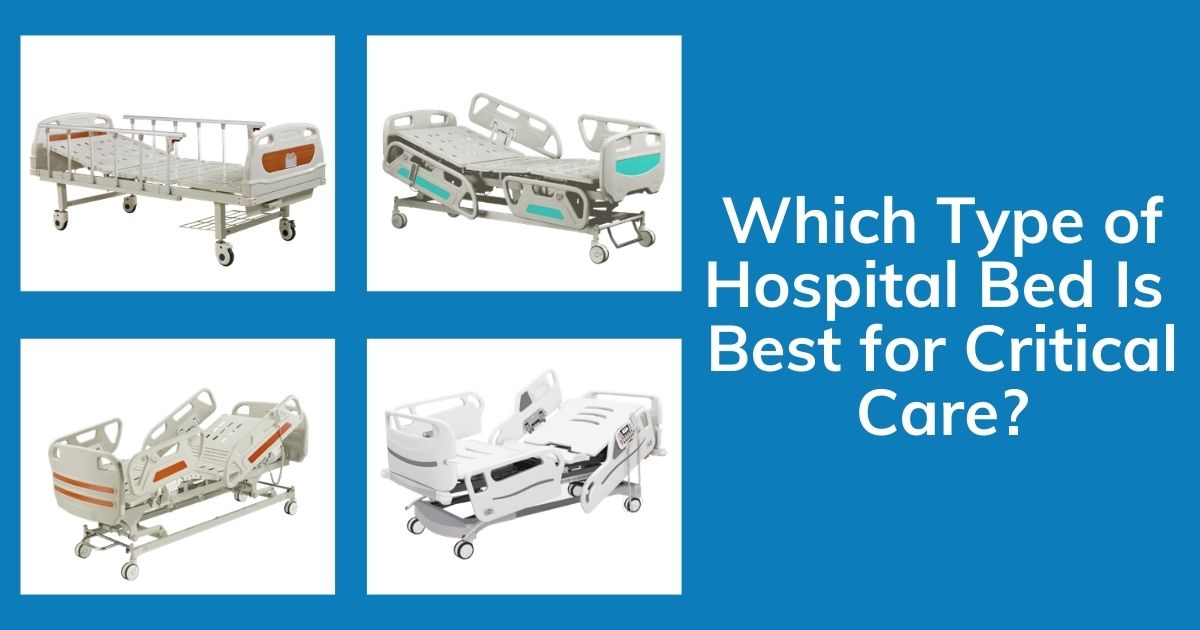
There are several broad hospital beds types in use today. At a glance, you’ll encounter general care beds for wards, high-acuity ICU beds, bariatric beds for heavier patients, paediatric beds that scale down for children and specialty beds for pressure management and mobility support. Each of these different types of hospital beds meets unique clinical requirements and offers a different set of hospital bed features, from motorised articulation to integrated monitoring mountings. Knowing the baseline capabilities of each type helps you prioritise which features are essential for your facility.
General care beds are versatile and widely used across standard inpatient wards. These hospital beds typically include manual or motorised height adjustment, side rails and basic recline functions that support everyday nursing tasks. The right general care bed balances cost and utility and will often include hospital bed features such as easy-clean surfaces, robust casters for mobility and compatible mattress platforms. For many hospitals, general care beds form the bulk of inventory and are the most frequently rotated assets.
ICU beds are purpose-built for the highest levels of care. These hospital beds provide fine-grained motorised articulation, advanced positioning presets, integrated scales and compatibility with monitoring devices. Crucial hospital bed features for ICU beds include anti-shear designs to protect skin integrity, low-height capability to reduce fall risk and durable electrical systems with battery backup. For critical care units, investing in ICU-specific beds directly impacts patient outcomes and staff safety during complex procedures.
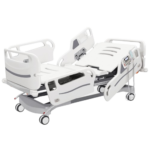
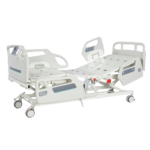
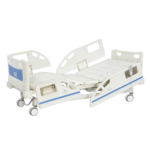
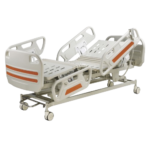
Bariatric beds are specialised hospital beds types designed to support higher weight capacities and wider frames. They include reinforced decks, heavy-duty actuators and wider surfaces that make transfers safer for both patients and carers. Important hospital bed features here are higher safe working loads, wider side-rail systems and mattresses designed to manage pressure at larger body sizes. When your facility serves diverse patient populations, appropriate bariatric beds ensure dignity and reduce injury risk during mobilisation.
Paediatric units require different types of hospital beds that feel less intimidating while remaining safe. These beds typically include lower heights, lockable side panels and intuitive adjustments that caregivers can operate without disturbing a sleeping child. Hospital bed features for paediatrics often prioritise rounded edges, integrated restraints for transport and mattress options that support neonatal or infant care. Choosing the right paediatric bed goes beyond aesthetics, it’s about creating a therapeutic environment that supports both clinical needs and child comfort.
Also Read: Why Are Specialized ICU Beds Essential for Critical Care Units?
Specialty beds, including low-air-loss and alternating pressure systems, fall under the broader list of hospital beds types for patients at high risk of pressure injuries. These systems combine mattress technology with bed features that redistribute pressure and support microclimate control. Key hospital bed features include mattress interfaces, programmable pressure algorithms and easy-to-operate controls for nursing teams. For long-term care units and rehabilitation wards, investing in specialty beds reduces complications and long-term care costs.
When evaluating beds, certain hospital bed features consistently influence staff workload and patient safety. Look for durable, non-porous surfaces that speed cleaning, central brake systems to stop unnecessary movement and ergonomic controls that reduce staff bending and reaching. Adjustable side rails, integrated IV and monitor mounts and modular head and foot boards also make a real difference. Before purchasing, match the different types of hospital beds against a features checklist tailored to your care model to avoid paying for features you don’t need or missing ones you do.
Also Read: Top Features to Look for in ICU Beds for Hospitals
Reducing caregiver steps and manual handling is a major advantage of modern hospital beds types. Features such as powered tilt, one-touch positioning, patient lift compatibility and transport-ready casters reduce lifting and repositioning efforts. These hospital bed features not only lower the risk of staff injury but also speed routine tasks like bed changes and patient transfers. In busy wards, the time saved per bed multiplies across a shift, small design choices scale into large operational benefits.
Cleanability must be a top criterion for any bed. Choose hospital bed types with sealed seams, antimicrobial surfaces and finishes that tolerate hospital-grade disinfectants. Hospital bed features that support infection control include removable, washable components and minimal hardware crevices. These design choices reduce turnaround time between patients and ensure you meet stringent cleaning protocols without damaging equipment over time.
For motorised hospital beds types, electrical reliability is a must. Look for battery backups, compliant electrical enclosures and easy-to-service actuators. Hospital bed features such as emergency manual overrides and clear electrical fault diagnostics keep beds operational during power transitions and reduce downtime for maintenance teams. For high-acuity settings, these safeguards are non-negotiable.
A bed is only as good as the mattress it supports. Different Hospital beds types require compatible mattresses that meet pressure-relief needs and infection-control specs. Hospital bed features like adjustable deck articulation and mattress retention systems ensure the mattress performs effectively and stays correctly positioned. Prioritise mattress-bed compatibility during procurement to avoid warranty issues and ensure clinical effectiveness.
Procurement teams should pilot beds in real clinical settings before large-scale purchases. Request cycle-life test data, maintenance plans and transparent warranty terms tailored to each candidate Hospital beds types. Compare initial costs with lifecycle expenses, including spare parts and servicing. Evaluating different types of hospital beds with a long-term budget lens prevents reactive buying and ensures steady performance across years.
Even the best hospital bed features only help if staff know how to use them. Plan hands-on training sessions, quick-reference guides and periodic refreshers. User comfort breeds compliance, clinicians who are confident with a bed’s controls will use presets, brakes and safety features correctly, improving patient outcomes and reducing damage caused by misuse.
Before you finalise any purchase, make sure you have matched the hospital beds types to clinical needs, validated hospital bed features, confirmed mattress compatibility, checked infection-control compliance and planned for warranties and spare parts. A disciplined checklist takes guesswork out of procurement and ensures you buy beds that last.
Choosing among the many hospital beds types is a strategic decision that affects care quality, staff wellbeing and operational costs. Matching different types of hospital beds to patient populations and prioritising the right hospital bed features ensures safer, faster and more humane care. Pilot where possible, weigh lifecycle costs, and always consider staff training as part of the purchase plan.
Stellar Medico is a trusted medical furniture supplier that stocks a wide range of hospital beds from general care and ICU models to bariatric, paediatric and specialty pressure-management beds. As your supplier, we provide durable, compliant beds with clear warranty support and accessible spare parts, making it easier for facilities to choose the right hospital beds types for each unit. If you want to equip your facility with beds that perform where it matters most, partner with us for reliable supply and practical product options.
So, are you ready to choose the right beds and equip your teams for better care? Contact us today, your trusted supplier for hospital beds that protect patients and support staff.
Social Sharing: