In critical care environments, every element of hospital infrastructure must support precision, safety, and efficiency. From life-support equipment to monitoring systems, every detail plays a role in patient recovery. Among these essential components, the hospital bed stands out as one of the most important pieces of equipment in intensive care units.
A well-designed icu hospital bed is not just a place for a patient to rest. It is a highly engineered medical device designed to support patient monitoring, treatment, mobility and safety during some of the most delicate stages of care.
Hospitals today rely on specialized critical care hospital bed systems that combine advanced functionality with durability. Choosing the right bed often involves careful evaluation of features, reliability and the reputation of the hospital bed manufacturer supplying it.
Critical care units operate differently from standard hospital wards. Patients admitted to intensive care units often require continuous monitoring, ventilator support and complex medical procedures.
Because of these demanding conditions, hospitals require specialized icu hospital bed solutions designed specifically for intensive care settings. These beds provide advanced positioning capabilities, safety features, and integration with medical equipment.
A well-designed critical care hospital bed allows healthcare professionals to adjust patient positioning quickly, improving breathing, circulation and comfort. This level of functionality is why hospitals carefully evaluate the expertise of a hospital bed manufacturer before making purchasing decisions.
Also Read: Understanding ICU Beds, their types and applications
The importance of hospital beds becomes even more significant when patients are in unstable conditions. Critical care patients may remain in the same bed for extended periods, making comfort and support extremely important.
Modern icu hospital bed systems are designed to reduce pressure injuries, assist caregivers during treatment and provide stability during medical procedures.
At the same time, a high-quality critical care hospital bed must also support the fast-paced workflow of intensive care staff. Nurses and doctors need beds that are easy to adjust, reliable and safe.
This is why hospitals depend on an experienced hospital bed manufacturer that understands the complex demands of critical care environments.
Also Read: Everything to Know About ICU Beds Before Importing for Hospitals
When evaluating the best icu hospital bed, healthcare facilities must consider several essential features that directly affect patient care and clinical efficiency.
One of the most important aspects of a critical care hospital bed is its ability to support multiple patient positions. Adjustable backrests, knee rests and height adjustments allow caregivers to provide proper treatment while ensuring patient comfort.
Reliable positioning systems are a hallmark of a trusted hospital bed manufacturer, ensuring that beds function smoothly even under continuous use.
Safety is critical in intensive care units. A high-quality icu hospital bed must include side rails, secure locking mechanisms and stable frames that prevent accidental falls or movement.
These features are essential in a critical care hospital bed because patients may be sedated, unconscious or unable to move independently.
Hospitals often prefer working with a reputable hospital bed manufacturer that prioritizes safety engineering in its designs.
In critical care environments, beds frequently need to be moved for procedures, imaging, or emergency interventions. A durable icu hospital bed includes smooth wheels and secure brakes that allow safe mobility.
At the same time, a critical care hospital bed must remain stable during treatment and monitoring procedures.
This balance between mobility and stability is a defining characteristic of a reliable hospital bed manufacturer.
Critical care beds must integrate seamlessly with ventilators, monitoring systems, IV stands and other life-support equipment.
A modern icu hospital bed includes attachment points and structural support for these devices, ensuring efficient workflow inside intensive care units.
Hospitals often select a critical care hospital bed from a trusted hospital bed manufacturer that designs beds with compatibility and adaptability in mind.
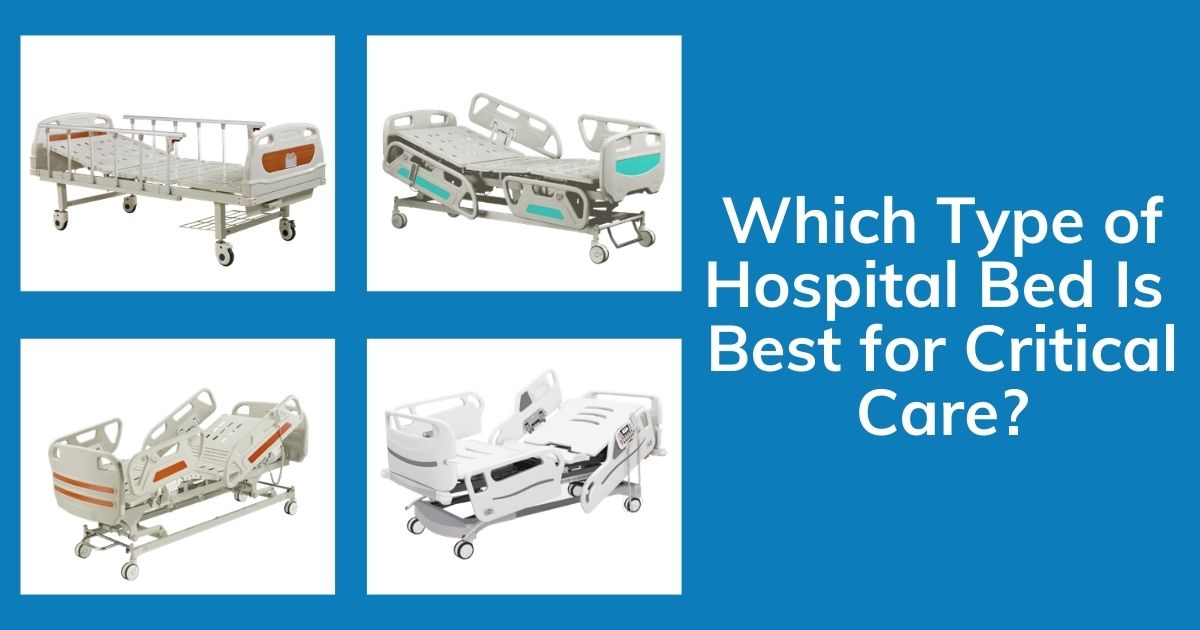
Different hospital beds are designed for different clinical requirements. Understanding these categories helps healthcare facilities identify the best icu hospital bed for intensive care settings.
Fully electric beds are among the most widely used options in intensive care units. These beds allow caregivers to adjust patient positioning using electronic controls.
A fully electric critical care hospital bed improves efficiency by enabling quick adjustments without physical strain for healthcare staff.
Hospitals often source these beds from a reliable hospital bed manufacturer that ensures durability and consistent performance.

Some modern icu hospital bed models integrate monitoring capabilities directly into the bed structure. These advanced systems support patient observation and simplify clinical workflows.
A technologically advanced critical care hospital bed can enhance both patient safety and caregiver efficiency.
Hospitals typically depend on an experienced hospital bed manufacturer to provide beds with reliable electronic systems.
For patients requiring higher weight capacity, bariatric beds are essential. These specialized beds are designed with reinforced frames and wider surfaces.
A bariatric icu hospital bed ensures comfort and safety for patients who need additional support.
Healthcare facilities often work with a trusted hospital bed manufacturer to ensure these beds meet structural and safety standards.
Hospital beds in intensive care units experience continuous use. They must withstand constant adjustments, frequent cleaning and heavy medical equipment.
A well-constructed critical care hospital bed uses high-strength materials and durable mechanisms to maintain performance over time.
Hospitals selecting an icu hospital bed often evaluate build quality and engineering standards before making a decision.
This is why choosing a dependable hospital bed manufacturer is essential for ensuring long-term reliability.
Healthcare professionals working in critical care units face intense workloads. A thoughtfully designed icu hospital bed can significantly reduce physical strain for nurses and doctors.
Height adjustment systems, smooth controls and ergonomic design make it easier to perform patient care tasks.
A modern critical care hospital bed supports faster and safer patient handling during medical procedures.
Hospitals typically rely on a trusted hospital bed manufacturer to provide beds designed with both patient comfort and caregiver efficiency in mind.
Maintaining hygiene is essential in intensive care units. Hospital beds must withstand frequent cleaning with hospital-grade disinfectants.
A well-designed ICU hospital bed features smooth surfaces and durable coatings that resist microbial buildup.
Similarly, a critical care hospital bed must maintain structural integrity despite repeated sanitization cycles.
Hospitals usually partner with a reliable hospital bed manufacturer that designs beds compatible with strict infection control protocols.
Selecting the right hospital bed manufacturer and supplier is as important as choosing the bed itself. Hospitals must evaluate supplier expertise, product reliability and support services.
A dependable partner ensures that every hospital bed meets healthcare quality standards and performs reliably in demanding environments.
Facilities investing in critical care hospital beds often prefer manufacturers and suppliers known for delivering durable medical infrastructure.
Also Read: How Stellar Medico Ensures Quality as a Medical Furniture Supplier
In critical care settings, hospital beds are far more than simple furniture. They are essential medical infrastructure that supports patient recovery, caregiver efficiency and hospital safety standards.
Choosing the right ICU hospital bed requires careful consideration of functionality, durability, safety, and compatibility with modern medical equipment. A well-engineered critical care hospital bed can significantly improve patient outcomes and streamline intensive care workflows.
Equally important is partnering with a trusted hospital bed supplier that understands the complexities of healthcare environments and delivers reliable solutions.
Stellar Medico stands as a dependable supplier of advanced medical furniture solutions designed for modern healthcare spaces. With a strong focus on quality and reliability, we support hospitals with thoughtfully designed hospital beds built to perform in demanding clinical environments.
If your healthcare facility is looking for dependable solutions for intensive care infrastructure, connect with us today and equip your hospital with reliable beds supplied by a trusted partner dedicated to supporting modern critical care environments.
Social Sharing: