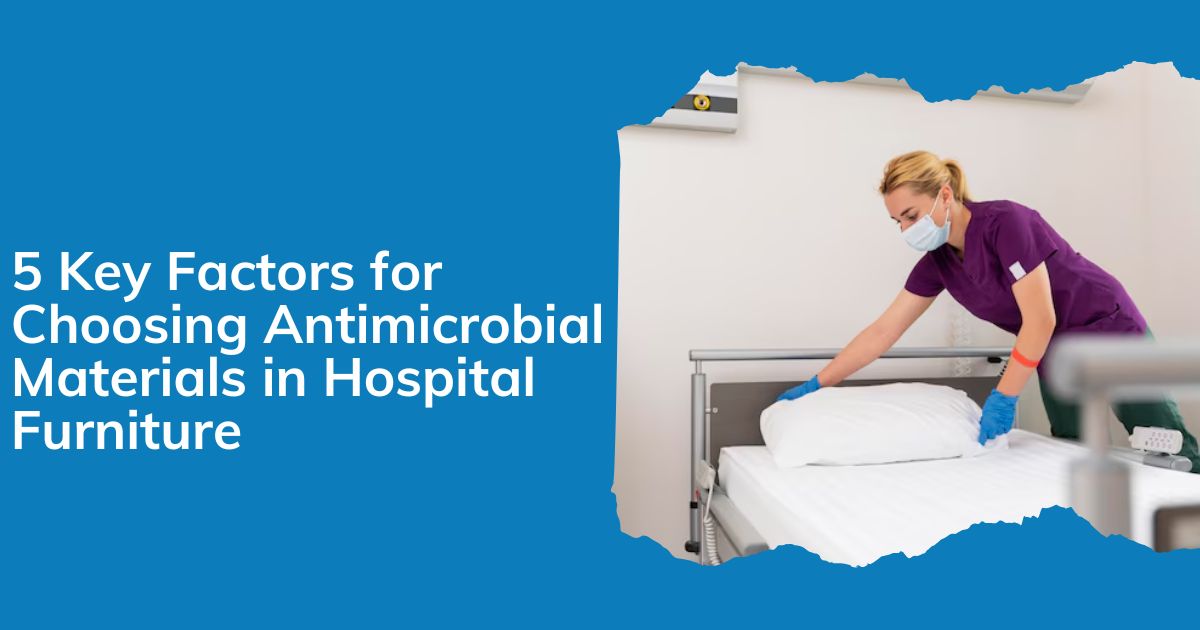
In today’s healthcare environments, infection prevention is no longer limited to clinical protocols alone. The physical environment, especially furniture, plays a critical role in supporting hygiene, safety and patient outcomes. From high-touch nursing stations to patient beds and waiting areas, furniture surfaces are constantly exposed to pathogens, disinfectants and heavy daily use. This is where antimicrobial hospital furniture becomes an essential part of modern healthcare planning. Choosing the right materials is not just about durability or aesthetics; it’s about supporting infection control, protecting caregivers and ensuring long-term operational efficiency.
This blog breaks down the five most important factors healthcare decision-makers must consider when selecting antimicrobial materials for hospital furniture.
Hospitals operate in environments where bacteria, viruses and fungi can easily spread through surface contact. While cleaning protocols are essential, they are not always enough on their own. Antimicrobial materials for healthcare add an extra layer of protection by actively reducing microbial growth between cleaning cycles.
When integrated into infection control furniture, these materials help lower contamination risks, support compliance with hygiene standards and reduce the burden on clinical staff. However, not all antimicrobial claims are equal and choosing the right materials requires careful evaluation.
Also Read: Why Is Infection-Control Furniture Essential for Hospitals?
The first and most critical factor in selecting antimicrobial hospital furniture is verifying that the materials used actually inhibit microbial growth. Many products claim to be antimicrobial, but only those tested under recognised laboratory standards truly deliver consistent performance.
High-quality antimicrobial materials for healthcare are tested against common hospital pathogens and show measurable reductions in bacterial or fungal activity over time. These materials are often integrated directly into the surface or coating rather than applied as temporary treatments. For furniture used in ICUs, isolation rooms or high-traffic OPDs, this embedded protection is essential.
True infection control furniture should demonstrate long-term antimicrobial effectiveness, not just short-term resistance immediately after installation.
Hospital furniture is exposed to frequent cleaning using strong disinfectants. If antimicrobial materials degrade, discolor or lose effectiveness due to chemical exposure, they fail their purpose. One of the most overlooked aspects of antimicrobial hospital furniture is how well the materials withstand repeated cleaning cycles.
Reliable antimicrobial materials for healthcare must be compatible with alcohol-based cleaners, chlorine solutions, and hospital-grade disinfectants without cracking, peeling or becoming porous. Materials that degrade over time can actually create micro-crevices that trap pathogens, undermining infection control efforts.
Durability under cleaning stress is what separates functional infection control furniture from products that only look good initially.
Also Read: Cleaners vs. Coatings: How to Select Finishes That Survive Daily Disinfectants Without Failing
Even the most advanced antimicrobial material can underperform if the furniture design allows dirt and moisture to accumulate. Seamless construction, smooth transitions and minimal joints play a major role in hygiene.
Effective antimicrobial hospital furniture combines antimicrobial surfaces with smart material engineering. Rounded edges, sealed seams and non-porous finishes prevent bacteria from settling into hard-to-clean areas. These design elements complement antimicrobial materials for healthcare by ensuring microbes have fewer places to hide.
When evaluating infection control furniture, it’s important to consider how the material behaves in real-world use, not just its chemical properties.
Hospital furniture is used continuously, often across multiple shifts and departments. Chairs, beds, trolleys and workstations experience repeated movement, weight loads, and surface friction. Antimicrobial performance must last throughout this lifecycle.
High-quality antimicrobial hospital furniture uses materials that retain their integrity despite mechanical stress. This includes resistance to scratches, dents, and wear that could compromise antimicrobial layers. Durable antimicrobial materials for healthcare reduce replacement frequency and help facilities maintain consistent hygiene standards over time.
From a procurement perspective, investing in robust infection control furniture also supports cost efficiency by lowering long-term maintenance and replacement costs.
Antimicrobial materials must be safe for continuous human contact. They should not release harmful substances, cause skin irritation or pose environmental risks during use or disposal. Safety is a non-negotiable factor when selecting antimicrobial hospital furniture.
Medical-grade antimicrobial materials for healthcare are designed to meet strict regulatory and safety standards. They balance microbial resistance with biocompatibility, ensuring patients and staff are not exposed to unnecessary chemical risks. This is especially important in paediatric wards, maternity units and long-term care facilities.
True infection control furniture supports health in every sense by reducing pathogens without introducing new hazards.
Also Read: 8 Reasons Why Safety Standards in Medical Furniture Can’t Be Ignored
While antimicrobial materials are not a replacement for cleaning protocols, they are a powerful reinforcement. By continuously suppressing microbial growth, antimicrobial hospital furniture helps reduce contamination levels between cleanings, supporting safer care environments.
Healthcare facilities that integrate antimicrobial materials for healthcare into their furniture strategies often see improved hygiene confidence among staff and patients. Over time, this contributes to better workflow efficiency, reduced cross-contamination risks and enhanced trust in care spaces.
As hospitals evolve, infection control furniture is becoming a foundational requirement rather than an optional upgrade.
One frequent mistake is focusing only on antimicrobial labels without understanding material performance. Not all antimicrobial solutions are designed for hospital-grade use. Another error is ignoring how materials interact with disinfectants, leading to premature wear.
Selecting antimicrobial hospital furniture should always involve evaluating real-world usage, cleaning intensity and lifecycle demands. Choosing the right antimicrobial materials for healthcare upfront prevents future hygiene and maintenance challenges.
Selecting antimicrobial materials for hospital furniture is about more than ticking a specification box. It requires furniture that combines proven antimicrobial performance, durability under constant cleaning, safe material composition and thoughtful design that supports hygiene in real-world healthcare settings.
We are your trusted medical furniture supplier offering antimicrobial hospital furniture engineered for modern healthcare environments. As a supplier, we provide furniture solutions built with reliable antimicrobial materials for healthcare, designed to support infection prevention without compromising durability or safety. Our range of infection control furniture is suited for hospitals, clinics and specialty care units where hygiene and performance matter every day.
If you’re looking to strengthen infection control through smarter furniture choices, partner with a supplier that understands healthcare realities.
Contact us today to equip your facility with antimicrobial hospital furniture that supports safer care, efficient workflows and long-term reliability.
Social Sharing: