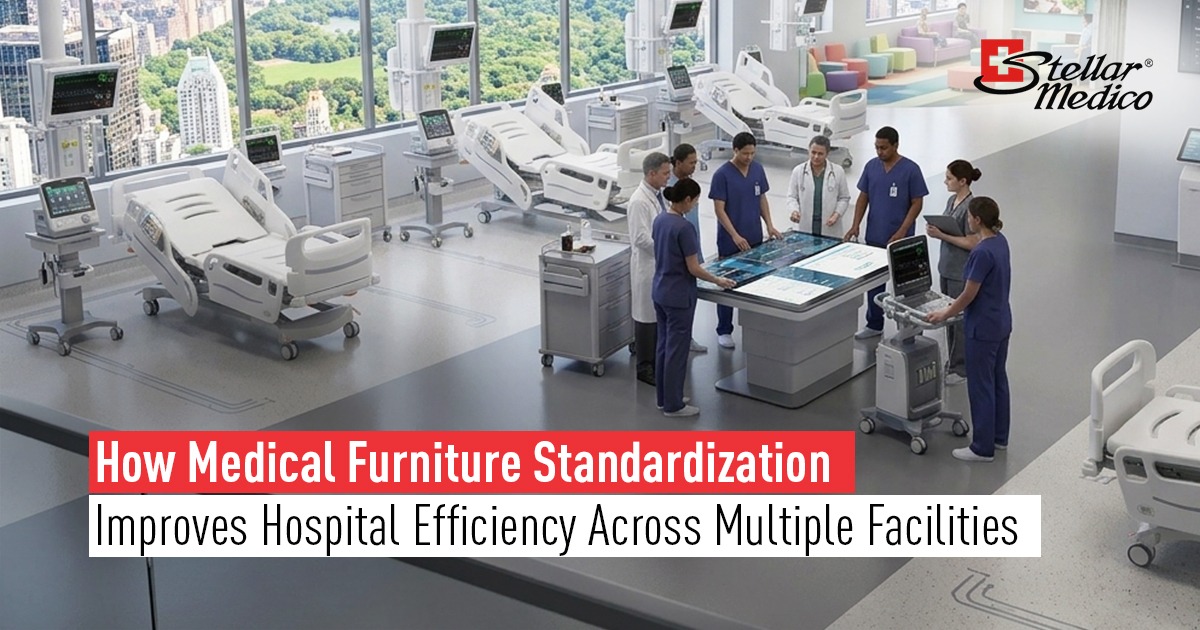
Managing multiple hospitals or healthcare centres comes with unique operational challenges. While each facility may serve different patient volumes or medical specialties, maintaining consistency in infrastructure is essential for delivering reliable healthcare services. One area that significantly influences daily operations is hospital furniture standardization. From patient rooms and nursing stations to emergency departments and waiting areas, using standardized medical furniture helps create familiar, efficient and well-organized healthcare environments across every location.
Adopting medical furniture standardization across facilities allows hospital groups to simplify procurement, improve maintenance, streamline staff workflows and maintain consistency in patient care environments. Combined with effective multi-site hospital furniture procurement, healthcare organizations can better manage resources while reducing unnecessary complexity across their network.
In this blog, we’ll explore how standardized medical furniture supports greater efficiency, operational control and long-term value for hospitals operating across multiple facilities.
Why Standardization Matters for Multi-Facility Healthcare Networks
As healthcare organizations expand, managing different furniture specifications at every location can quickly become complicated. Different models, dimensions, replacement parts and maintenance requirements often increase operational challenges for facility management teams.
Implementing hospital furniture standardization creates greater consistency across departments, making it easier to manage procurement, maintenance, training and future expansions. Staff moving between facilities become familiar with furniture layouts and equipment placement, helping them adapt more quickly to different hospital locations.
At the same time, medical furniture standardization across facilities supports better planning by ensuring every hospital follows similar infrastructure standards while still allowing flexibility where specialized departments require unique furniture solutions.
This consistency also strengthens hospital group furniture procurement, enabling healthcare organizations to purchase products more efficiently while maintaining uniformity throughout their network.
Improving Operational Efficiency Through Consistent Furniture
Hospital workflows depend heavily on the accessibility and functionality of medical furniture. When furniture varies significantly between facilities, staff often require additional time to locate storage, adjust equipment or adapt to unfamiliar layouts.
With effective hospital furniture standardization, hospitals can create similar work environments across multiple locations. Nurses, clinicians and support staff benefit from consistent furniture placement, improving workflow efficiency and reducing unnecessary delays during daily operations.
A structured approach to medical furniture standardization across facilities also simplifies staff orientation when employees rotate between hospitals within the same healthcare network.
As organizations expand, coordinated multi-site hospital furniture procurement further supports operational efficiency by ensuring standardized products are available for every newly developed or upgraded facility.
Simplifying Procurement Across Multiple Hospitals
Managing procurement separately for each hospital often results in inconsistent purchasing decisions, varying product specifications and increased administrative effort.
Strategic hospital group furniture procurement helps centralize purchasing activities, making it easier to manage product specifications, supplier relationships and purchasing schedules across multiple locations.
When combined with hospital furniture standardization, centralized procurement reduces duplication, simplifies inventory management and improves purchasing efficiency. Standardized product selections also make future expansion projects more straightforward because hospitals can continue using established furniture specifications.
Many healthcare organizations also collaborate with experienced hospital furniture suppliers who can provide consistent product availability across multiple procurement cycles, supporting long-term infrastructure planning.
Making Maintenance and Replacements More Efficient
One of the biggest advantages of medical furniture standardization across facilities is simplified maintenance. When hospitals use similar furniture models throughout their network, maintenance teams become familiar with product designs, replacement components and servicing requirements.
This consistency reduces training requirements while making repairs more efficient. Spare parts can often be managed more effectively and maintenance schedules become easier to standardize across locations.
Reliable multi-site hospital furniture procurement also supports long-term maintenance planning by ensuring replacement products remain consistent with existing furniture specifications.
Hospitals working with established medical furniture suppliers often benefit from greater product continuity, helping maintain uniformity when replacing or expanding furniture inventories.
Supporting Better Staff Experience Across Every Facility
Healthcare professionals frequently move between departments, campuses or hospitals within larger healthcare networks. Working with different furniture layouts and equipment configurations at every location can slow workflows and increase the learning curve.
Through hospital furniture standardization, hospitals create familiar work environments that help staff transition smoothly between facilities. Consistent nursing stations, patient room layouts, work surfaces, storage units and treatment furniture improve confidence and reduce unnecessary adjustments during daily operations.
Similarly, medical furniture standardization across facilities supports standardized clinical processes by ensuring furniture functions consistently regardless of location.
Healthcare organizations also benefit from more organized hospital group furniture procurement, allowing furniture selections to align with operational requirements across every facility rather than making isolated purchasing decisions.
Enhancing Patient Experience Through Consistency
Patients visiting different hospitals within the same healthcare network often expect a similar level of comfort, accessibility and care. While medical treatment may vary between departments, consistent healthcare environments help reinforce confidence in the overall patient experience.
Standardized patient beds, waiting area furniture, examination rooms and recovery spaces contribute to a familiar environment across multiple locations. Hospital furniture standardization helps ensure patients receive a consistent experience regardless of which facility they visit.
Many hospitals also partner with trusted healthcare furniture suppliers when expanding standardized furniture programmes to maintain quality and consistency across various patient care areas.
Reducing Costs Through Smarter Standardization
Managing furniture separately for every hospital often leads to inconsistent purchasing, duplicate inventories and higher operational expenses. In contrast, hospital furniture standardization allows healthcare organizations to optimize purchasing decisions while maintaining consistent quality across all facilities.
With a structured approach to medical furniture standardization across facilities, hospitals can simplify inventory management, reduce unnecessary product variations and improve budget planning for future purchases. Standardized specifications also make multi-site hospital furniture procurement more efficient by allowing healthcare groups to coordinate orders across multiple locations instead of purchasing independently.
Over time, this consistency helps reduce administrative effort, simplifies maintenance planning and supports better financial control without compromising the quality of patient care environments.
Preparing Hospitals for Future Expansion
Healthcare networks continue to expand by opening new facilities, upgrading existing campuses or adding specialized departments. Without consistent infrastructure standards, each expansion project may introduce new furniture models, varying layouts and additional maintenance challenges.
This is where medical furniture standardization across facilities creates long-term value. Standardized furniture specifications allow new hospitals and departments to integrate seamlessly with existing facilities, making future expansion far more manageable.
A well-planned procurement strategy also supports scalability by ensuring every new location follows the same furniture standards while allowing flexibility for specialized clinical areas. Healthcare facilities can therefore expand confidently without creating unnecessary operational complexity.
Hospitals often work with experienced patient beds and accessories suppliers to maintain consistency in patient accommodation areas as new departments become operational.
Why Choosing the Right Supplier Makes a Difference
Standardization is only successful when hospitals have access to reliable products that remain consistent over time. Choosing a dependable supplier helps healthcare organizations maintain the same quality, specifications and product availability across every facility.
Experienced medical equipment furniture suppliers understand the importance of supplying standardized furniture solutions that support long-term operational requirements. Reliable supply also makes future replacements and expansion projects much easier because hospitals can continue using compatible furniture throughout their network.
Depending on procurement strategies and project requirements, some healthcare organizations may also evaluate sourcing options from hospital equipment suppliers China to complement their broader purchasing plans.
Ultimately, selecting the right supplier strengthens hospital furniture standardization by ensuring consistency from the first installation through future upgrades and replacements.
Standardization Creates Stronger, More Efficient Healthcare Networks
Medical furniture is much more than a collection of individual products, it is a critical part of how hospitals function every day. Adopting hospital furniture standardization enables healthcare organizations to create consistent, efficient and well-organized clinical environments across multiple facilities.
By implementing medical furniture standardization across facilities, hospitals can simplify operations, improve staff productivity, streamline multi-site hospital furniture procurement and strengthen hospital group furniture procurement for long-term growth. Standardization not only supports better resource management but also creates familiar environments that benefit both healthcare professionals and patients across every location.
Build Consistency Across Every Healthcare Facility with the Right Medical Furniture
As healthcare organizations continue to grow, maintaining consistency across multiple facilities becomes increasingly important. Strategic hospital furniture standardization supports smoother operations, more efficient procurement, easier maintenance and a better experience for both patients and healthcare professionals. Combined with medical furniture standardization across facilities, it provides a strong foundation for long-term operational success and sustainable healthcare infrastructure.
As a trusted medical furniture supplier, Stellar Medico supplies a comprehensive range of hospital furniture solutions designed to meet the demands of modern healthcare environments. Whether you’re standardizing furniture across existing facilities or furnishing new healthcare spaces, we provide reliable products that support consistent quality across every project.
Partner with us today and build smarter, more efficient healthcare facilities with dependable medical furniture solutions designed for long-term performance.
FAQs
1. Why is hospital furniture standardization important for healthcare groups?
2. How does medical furniture standardization across facilities improve operational efficiency?
3. What are the advantages of multi-site hospital furniture procurement?
4. How does hospital group furniture procurement support future hospital expansion?
5. Why should hospitals work with an experienced medical furniture supplier?
Social Sharing: