In any hospital, the Intensive Care Unit is where medical precision meets life-saving urgency. Every piece of equipment inside this space must support continuous monitoring, rapid intervention and patient comfort under extreme conditions. Among all ICU equipment, beds play a far more critical role than most people realize. Understanding types of ICU beds is essential for hospitals aiming to deliver advanced critical care while ensuring safety, efficiency and long-term reliability.
ICU beds are not just places for patients to rest. They are engineered medical platforms designed to support complex treatments, reduce complications, and improve recovery outcomes. As healthcare standards evolve, hospitals must carefully evaluate ICU bed types, applications and design benefits before procurement.
The importance of ICU beds in hospitals goes beyond basic patient support. These beds are integral to patient monitoring, ventilation support, mobility management and emergency procedures. Unlike general ward beds, ICU beds are designed to handle constant adjustments, advanced positioning and integration with life-support equipment.
Modern healthcare facilities rely on specialized ICU beds to improve workflow efficiency while ensuring patient safety during long ICU stays.
Also Read: How to Choose the Right Hospital Bed for Your Healthcare Facility: A Complete Guide
Understanding the difference between ICU bed and normal hospital bed helps highlight why specialized beds are essential in critical care. Normal hospital beds offer limited adjustability and are suitable for stable patients. ICU beds, however, are designed for patients requiring continuous observation, advanced positioning and intensive medical intervention.
ICU beds support multiple positioning functions, higher weight capacity, integrated controls and compatibility with monitoring devices, making them indispensable in intensive care settings.
The evolution of healthcare technology has transformed modern ICU bed design and benefits significantly. Today’s ICU beds are built to improve patient outcomes while reducing caregiver strain. Features such as electronic controls, precision positioning and ergonomic access have become standard expectations.
Hospitals choosing advanced ICU bed types and uses benefit from improved infection control, faster response times and enhanced patient comfort.
Also Read: 10 ICU Bed Features That Save Staff Steps and Reduce Turnaround Time
Understanding types of ICU beds allows healthcare facilities to choose the right solution for specific clinical needs. Each ICU bed type serves a distinct function and supports different levels of patient care.
Selecting the correct ICU bed is not about preference, it is about clinical application, patient condition and operational efficiency.
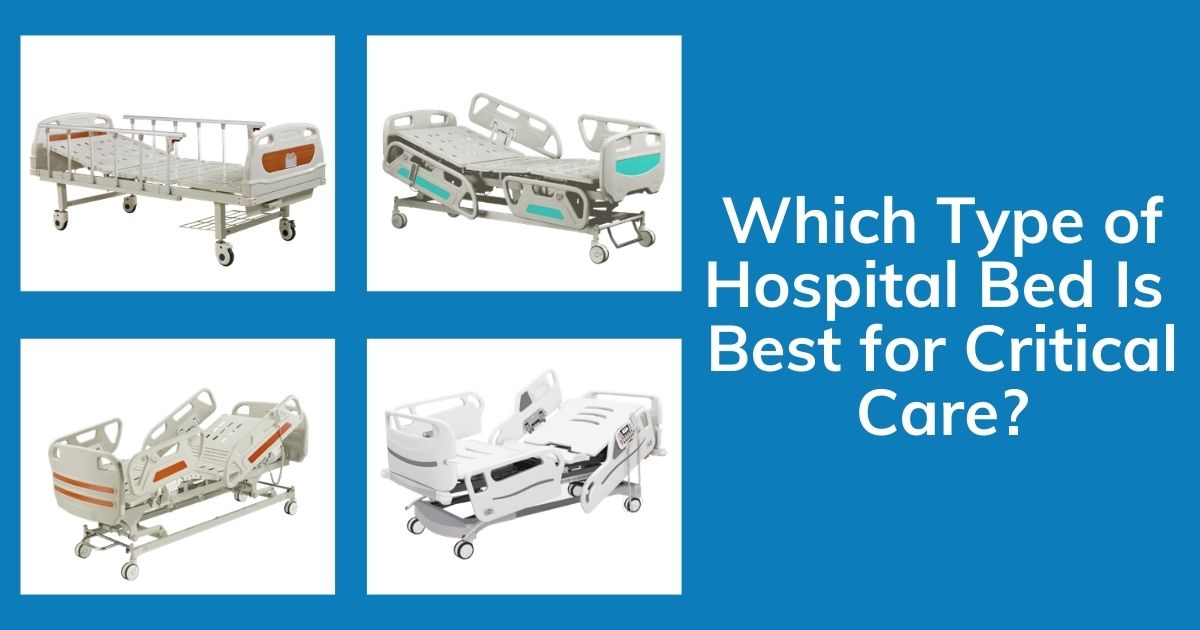
Manual ICU beds rely on mechanical adjustments operated by healthcare staff. While they lack automation, these beds remain relevant in certain care settings due to their durability and cost-effectiveness.
In discussions around electric ICU beds vs manual ICU beds, manual options are often chosen for short-term critical care or facilities with limited infrastructure while still meeting essential ICU requirements.
Semi-electric ICU beds combine manual and electrical functions. Height adjustments are typically manual, while head and foot positioning are electric. This hybrid approach makes them suitable for mid-level intensive care.
These beds support many ICU bed types and uses where moderate flexibility and caregiver efficiency are required.
Fully electric beds represent the most advanced types of ICU beds available today. All adjustments, including height, tilt, backrest and leg positioning, are controlled electronically, reducing caregiver strain and improving precision.
When comparing electric ICU beds vs manual ICU beds, fully electric models offer superior safety, faster response during emergencies and better patient comfort.
Also Read: Everything to Know About ICU Beds Before Importing for Hospitals
Bariatric ICU beds are designed for patients with higher body weight and require reinforced structures, wider surfaces and enhanced stability. These specialized ICU beds ensure safety without compromising functionality.
Hospitals focused on inclusive critical care increasingly recognize bariatric beds as essential within modern ICU setups.
Pediatric ICU beds are engineered specifically for children, addressing safety, size and comfort requirements. These beds support critical pediatric care while ensuring protection against accidental falls or injuries.
This highlights how diverse types of ICU beds must be to cater to different patient populations.
Certain ICU bed types are designed for trauma care, neurological patients or cardiac units. These specialty beds support precise positioning and rapid access during emergency interventions.
Understanding ICU bed types and uses helps hospitals align bed selection with specialized departments and treatment protocols.
The applications of ICU beds extend across multiple departments, including medical ICUs, surgical ICUs, cardiac care units, neonatal ICUs and emergency trauma centers.
Each department relies on specific types of ICU beds to meet clinical demands while ensuring patient stability and staff efficiency.
The importance of ICU beds in hospitals is closely tied to patient outcomes. Proper positioning reduces the risk of pressure injuries, improves respiratory function and supports faster recovery.
Advanced modern ICU bed design and benefits also contribute to infection control and reduced patient handling risks.
Caregiver safety is a critical factor in ICU design. ICU beds with advanced adjustability reduce physical strain on nurses and doctors, allowing them to focus on patient care rather than manual handling.
This is a key advantage when evaluating best ICU beds for hospitals focused on long-term operational efficiency.
Also Read: A Guide to Smart Beds and Connected Recliners That Transform Critical Care Workflows
Choosing between electric ICU beds vs manual ICU beds depends on patient acuity, staffing levels and budget considerations. While manual beds offer simplicity, electric beds enhance precision, speed, and safety.
Hospitals aiming for advanced critical care environments increasingly prefer electric ICU beds due to their adaptability and reduced workload for caregivers.
When evaluating types of ICU beds, hospitals must consider durability, adjustability, infection control compatibility and long-term maintenance. Beds should support modern medical equipment integration and comply with healthcare standards.
Selecting the best ICU beds for hospitals is a strategic investment that directly impacts patient care quality.
The future of ICU care lies in smarter, more adaptive beds. Innovations in modern ICU bed design and benefits focus on patient monitoring integration, data-driven adjustments and enhanced mobility support.
As healthcare evolves, ICU beds will continue to play a central role in critical care delivery.
Even the most advanced types of ICU beds can underperform if not supplied and supported by experienced professionals. Reliable sourcing ensures consistency, compliance and long-term usability.
Hospitals benefit from suppliers who understand ICU workflows and deliver beds aligned with real-world clinical demands.
Understanding types of ICU beds is essential for hospitals committed to delivering high-quality critical care. From manual to fully electric options, each bed type serves a specific purpose within intensive care environments.
Stellar Medico stands out as a trusted medical furniture supplier offering high-quality ICU beds designed to support modern critical care requirements. Our range aligns with evolving hospital needs, focusing on durability, functionality and patient safety without compromising on design or usability.
If your hospital is planning to upgrade or expand ICU facilities, choose solutions that support care excellence from day one.
Partner with us for reliable, well-engineered ICU beds that elevate critical care standards, connect with us today.
Social Sharing: