Updated on June 29, 2026, for accuracy and clarity.

TL;DR: Designing an effective patient room requires balancing comfort, safety, functionality, and clinical efficiency. A well-planned patient room should promote healing through adequate lighting, ergonomic furniture, infection-control-friendly materials, sufficient storage, privacy features, and easy access to medical equipment. Modern healthcare facilities are increasingly focusing on patient-centered room designs that enhance patient satisfaction, improve staff workflow, reduce stress, and support faster recovery outcomes. By incorporating thoughtful layouts, durable medical furniture, and flexible design elements, hospitals can create spaces that are both welcoming and operationally efficient.
For healthcare administrators, architects, and facility managers, investing in functional patient room design is essential for improving patient experiences while optimizing healthcare delivery. Strategic room planning, quality medical furnishings, and attention to accessibility standards can significantly contribute to better clinical outcomes and long-term facility performance.
When you think about recovery, patient care and comfort, the hospital room plays a bigger role than most realize. It’s more than a space for treatment, it’s a space where healing begins. The physical environment has a direct impact on how patients feel, respond to treatment and even how staff performs. This is why incorporating the right patient room design tips is not just smart, it is essential.
Here are five thoughtful patient room design tips that focus on comfort, efficiency, and healing.
Hospitals are not known for comfort but they should be. One of the most effective patient room design tips is to create a space that does not feel overly clinical. While it is important to meet medical standards, that does not mean the room has to be cold or impersonal.
Use warm lighting, calming colors and textured wall finishes to enhance visual comfort. Comfortable seating, quality bedding and easy-to-use storage options help patients feel more settled. Incorporating familiar elements like natural light, scenic views or even personal artwork can drastically improve the patient’s mood. In all of this, the role of medical furniture for patient rooms is critical. Ergonomically designed beds, recliner chairs for companions and bedside cabinets with smart storage options are more than functional, they create a sense of comfort and independence.
Healthcare is evolving and so should patient room design. One of the most relevant patient room design tips today is to keep adaptability at the center of your planning. Modern patient rooms need to accommodate different types of treatments, visiting schedules and even tech integration. Flexible furniture systems, integrated power ports and smart nurse-call systems are now standard expectations. Wall-mounted units for medical devices help keep the floor area open and uncluttered. The right hospital furniture design supports this flexibility with modular units that can easily be moved, upgraded or reconfigured as needed. At Stellar Medico, our approach to medical furniture for patient rooms is based on today’s functionality and tomorrow’s adaptability. Each product that we supply is designed not just for durability, but for how well it fits into a busy, high-pressure healthcare environment.
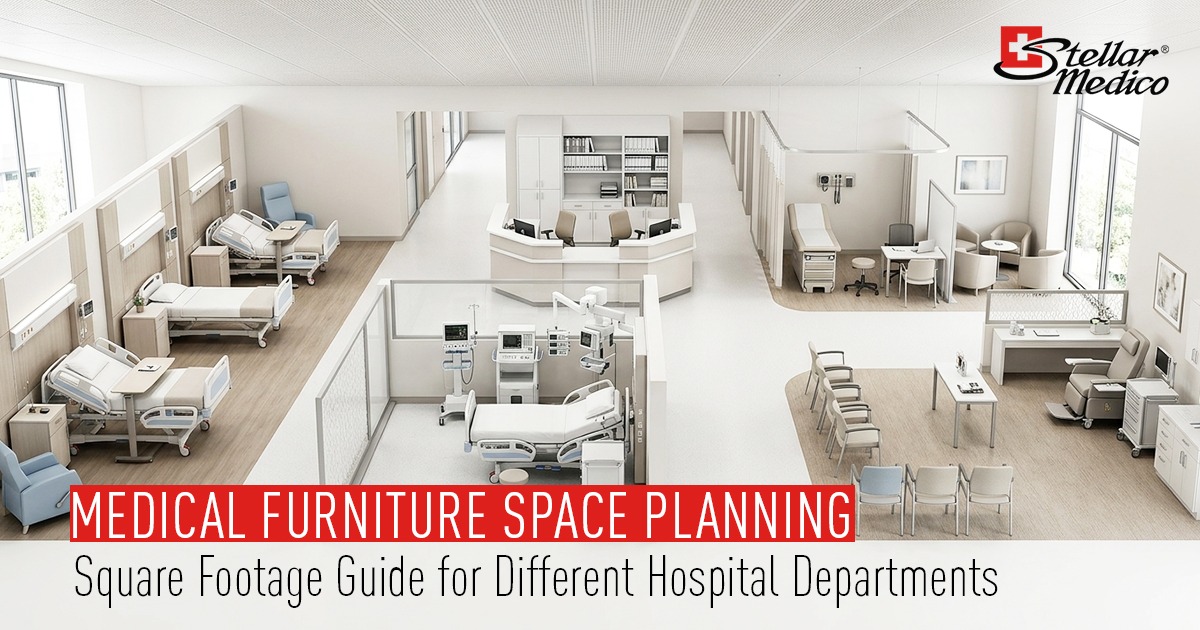
Another often-overlooked but essential part of patient room design tips is layout. It’s not just about what furniture you choose, but where you place it. Zoning the room for three core groups, that are: patients, caregivers and visitors can greatly enhance comfort and efficiency. For example, patient beds should allow maximum visibility of natural light and direct access to the restroom. Caregiver zones should be near the entrance with easy access to equipment and sanitation stations. Visitor seating should be placed away from clinical tools to give families a comfortable space that feels private. An effective hospital furniture design includes mobile furniture, wall-mounted systems and space-saving consoles that make these zones work well together. The goal is to maintain clear movement paths, minimize clutter and enhance usability, especially in high-traffic hospital settings.
An optimal furniture layout is not just about aesthetics, it directly affects patient care, safety and staff efficiency. For single-bed rooms, a linear layout where the bed is centrally aligned with the door and adjacent to the window can provide a sense of orientation and access to natural light. In multi-bed configurations, L-shaped or angled layouts can offer semi-privacy while maintaining clear visibility for nurses. Use wall-mounted furniture like foldable overbed tables and modular storage to free up floor space, especially near the foot of the bed where movement is highest. Built-in cabinets for medical supplies near the headwall reduce unnecessary traffic, while recessed lighting and ceiling-mounted equipment booms help declutter the floor. Visitor chairs placed diagonally from the patient’s line of sight allow face-to-face interaction without interfering with medical access. By applying advanced hospital furniture design strategies in room layout, you create environments that are adaptable, efficient and emotionally supportive, all of which contribute to better recovery outcomes.
Comfort supports healing. It is why one of the most holistic patient room design tips is to consider sensory wellness. Healing environments use more than just functional elements, they use design to ease stress and promote rest. Natural lighting, soothing color palettes and noise-reducing materials can make patient rooms feel safe and serene. Using textures, nature-inspired décor and even plants (when possible) can help patients feel more connected to life outside the hospital. High-quality medical furniture for patient rooms contributes here too. Comfortable recliners, supportive beds and thoughtfully designed overbed tables ensure the room doesn’t just look good but supports the physical needs of recovery. Stellar Medico products are specifically designed to support comfort without compromising on hygiene or clinical utility.
Behind every great patient room is a thoughtful supplier who understands healthcare spaces. Choosing a reliable supplier, who procures products from the right hospital furniture manufacturer ensures you get not only the right products but also design support, customization and long-term value. At Stellar Medico, we go beyond just supplying beds or storage. We work closely with healthcare manufacturers to understand workflow, space constraints and design objectives. The furniture we supply is engineered to meet industry standards for safety, infection control and durability. As your partner, we bring in-depth knowledge of hospital furniture design and provide solutions for efficient, functional and healing spaces. That’s what makes Stellar Medico a trusted name across leading hospitals and care facilities on a global level.
Today’s hospital rooms are expected to do more than hold a bed and a chair. They are the frontlines of patient care and comfort. When you implement the right patient room design tips, you help create a space where healing is not just clinical, it is emotional and environmental too. From comfort-centric layouts and smart zoning to adaptable furniture and healing ambiance, thoughtful design can make all the difference. And with Stellar Medico’s range of medical furniture for patient rooms, you are not just choosing products, you are choosing a partner who understands what healing spaces really need. With these five key patient room design tips, hospitals can redefine what it means to care. And it all starts with the right design, the right layout and the right supplier, so, connect with us today or explore our range of furniture to know what suits your medical facility the best!
A well-designed patient room includes comfortable furniture, proper lighting, sufficient storage, privacy features, and easy access to medical equipment. These elements work together to enhance patient comfort, support healthcare staff efficiency, and create a safer healing environment. A thoughtful room layout can also improve patient satisfaction and streamline daily care activities.
Patient room design directly impacts recovery by creating a comfortable, stress-free, and supportive healing environment. Features such as natural lighting, reduced noise levels, ergonomic furniture, and adequate privacy can improve patient well-being and contribute to a more positive healthcare experience. Comfortable surroundings often help patients feel more relaxed during treatment and recovery.
Furniture selection is important because it affects patient comfort, safety, hygiene, and caregiver efficiency. Hospital beds, bedside cabinets, overbed tables, and seating should be durable, easy to clean, and designed for healthcare use. Proper medical furniture also supports infection control and helps healthcare professionals provide care more effectively.
Patient room design should include safety features such as non-slip flooring, proper lighting, accessible layouts, handrails, and infection-resistant surfaces. These features help reduce the risk of falls, improve mobility, and maintain a safer environment for patients, visitors, and healthcare workers. Safety-focused design also supports compliance with healthcare facility standards.
Hospitals can make patient rooms more comfortable and functional by combining ergonomic furniture, flexible layouts, adequate storage, privacy solutions, and patient-centered amenities. Comfortable seating, adjustable beds, proper lighting, and easy access to essential services can significantly improve the patient experience. Functional room designs also help healthcare staff deliver care more efficiently.
Social Sharing: