Hospitals are environments where safety, hygiene and durability must work together seamlessly. Every piece of furniture inside a healthcare facility, from hospital beds and examination tables to cabinets and workstations, must withstand demanding conditions. These environments involve constant sanitization, exposure to disinfectants and strict fire safety regulations.
Because of these requirements, the selection of medical furniture materials becomes extremely important. Hospitals cannot rely on ordinary furniture components; instead, they require materials engineered to withstand harsh conditions while supporting patient safety and healthcare operations.
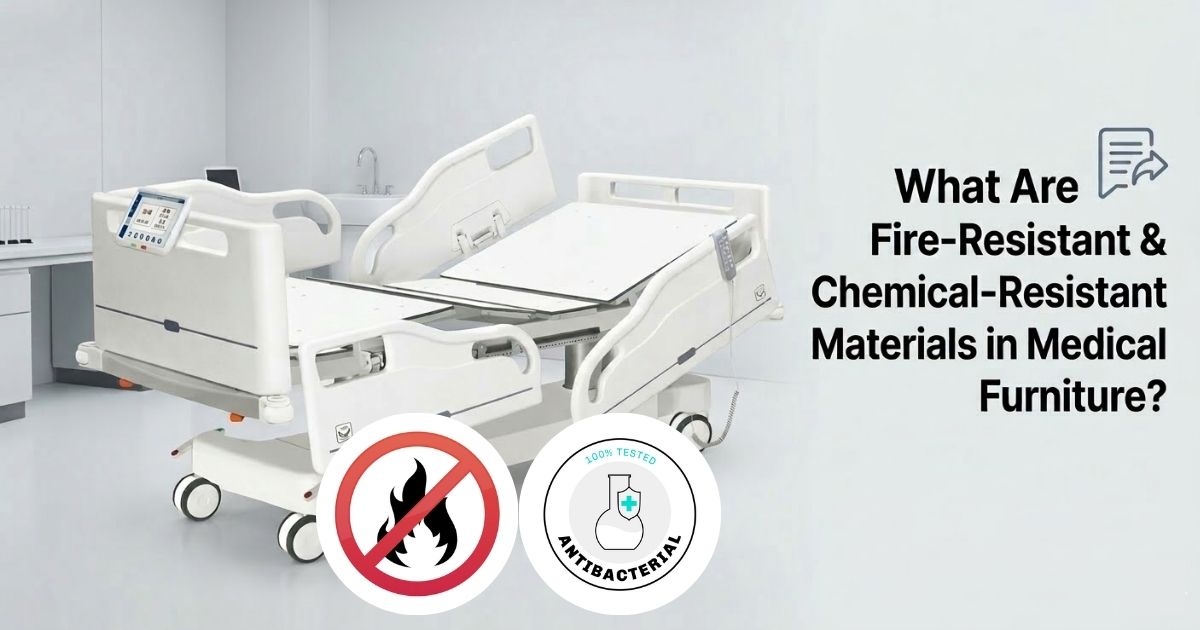
Two critical characteristics that modern hospital furniture must possess are resistance to chemicals and resistance to fire. This is why healthcare facilities increasingly prioritize chemical resistant medical furniture and fire resistant medical furniture when designing patient care environments.
Understanding how these specialized materials work and why they are essential, helps hospitals create safer and more reliable healthcare spaces.
Hospitals are unlike typical workplaces. Furniture is exposed to continuous use, repeated cleaning cycles and potential exposure to hazardous substances.
This is why the quality of medical furniture materials directly affects both operational efficiency and patient safety. Durable materials ensure that hospital furniture maintains its structural integrity even after years of constant use.
Healthcare facilities also require furniture that can withstand powerful disinfectants used to maintain sterile environments. This is where chemical resistant medical furniture becomes essential.
Additionally, hospitals must follow strict fire safety regulations. Materials that slow or resist combustion help prevent accidents from escalating into dangerous situations. For this reason, healthcare infrastructure often incorporates fire resistant medical furniture designed to meet safety standards.
Selecting the right materials helps hospitals maintain compliance, durability and hygiene in one integrated solution.
Also Read: How Stellar Medico Ensures Quality as a Medical Furniture Supplier
In healthcare environments, furniture surfaces are cleaned and disinfected multiple times every day. These cleaning procedures often involve strong chemicals such as alcohol-based disinfectants, bleach solutions and hospital-grade sanitizers.
Without the right medical furniture materials, these chemicals can degrade surfaces, cause discoloration or weaken structural components over time.
This is why hospitals depend on chemical resistant medical furniture that can tolerate frequent exposure to harsh cleaning agents without losing strength or functionality.
Such furniture typically uses specially engineered coatings, laminated surfaces and high-performance polymers. These materials allow healthcare staff to maintain strict sanitation protocols without worrying about damaging the furniture itself.
Because sanitation is a daily requirement in hospitals, chemical resistant medical furniture plays a vital role in ensuring both hygiene and durability.
Also Read: Antimicrobial Coatings vs. Antimicrobial Plastics: Which Actually Prevents Surface Transmission?
Fire safety is one of the most important aspects of hospital infrastructure. Hospitals contain electrical equipment, oxygen supplies and various flammable materials, which increases the need for strict fire prevention measures.
The use of fire resistant medical furniture helps reduce the risk of fire spreading rapidly within healthcare environments. These specialized materials are designed to slow down combustion and limit the release of harmful smoke during emergencies.
Hospitals often use medical furniture materials that meet recognized fire safety standards. These materials are engineered to withstand high temperatures and prevent flames from spreading quickly.
Installing fire resistant medical furniture is therefore not just a precaution, it is an essential component of hospital safety planning.
Also Read: Essential Certifications to Look for When Buying Medical-Grade Furniture
Different materials are used in the production of hospital furniture to ensure durability, hygiene and safety. Each material plays a specific role in creating reliable medical infrastructure.
High-pressure laminates are commonly used medical furniture materials because they offer strong resistance to both chemicals and physical damage. These surfaces are frequently used in cabinets, countertops and workstations.
Because they are easy to clean and maintain, they contribute to the effectiveness of chemical resistant medical furniture.
Powder-coated steel and aluminum are widely used in hospital beds, trolleys and equipment frames. These coatings protect the metal from corrosion and exposure to cleaning chemicals.
The use of these durable medical furniture materials ensures that both chemical resistant medical furniture and fire resistant medical furniture remain functional even under demanding conditions.
Advanced polymers are another common choice for hospital furniture components. These materials are lightweight, durable and resistant to both moisture and chemicals.
Because they tolerate repeated sanitation cycles, they are often used in chemical resistant medical furniture applications.
Many hospital beds and seating systems incorporate specialized fabrics designed to resist ignition. These upholstery materials help ensure that fire resistant medical furniture meets healthcare safety standards.
Hospitals must maintain extremely high levels of hygiene to protect patients from infections. Furniture surfaces can become breeding grounds for bacteria if they are difficult to clean or damaged by disinfectants.
This is why modern medical furniture materials are designed with smooth, non-porous surfaces. These surfaces prevent microbes from accumulating and make cleaning more effective.
Because sanitation protocols involve frequent use of disinfectants, chemical resistant medical furniture allows healthcare staff to clean surfaces without compromising structural integrity.
At the same time, fire resistant medical furniture ensures that safety measures remain intact even in areas with electrical equipment and oxygen supply systems.
By combining hygiene and safety properties, these materials contribute significantly to infection control strategies in hospitals.
Also Read: Why Is Infection-Control Furniture Essential for Hospitals?
Hospital furniture must endure years of continuous use. Beds are adjusted repeatedly, equipment is moved frequently and surfaces are cleaned constantly.
High-quality medical furniture materials ensure that hospital furniture maintains its performance over long periods without requiring frequent replacement.
Furniture designed with durable coatings and structural reinforcements supports the development of reliable chemical resistant medical furniture solutions.
Similarly, advanced materials used in fire resistant medical furniture allow hospitals to maintain safety standards without sacrificing durability.
Long-lasting materials reduce maintenance costs and help healthcare facilities operate more efficiently.
Healthcare professionals work in high-pressure environments where efficiency and reliability are critical. Furniture that fails under demanding conditions can disrupt workflows and delay patient care.
By using carefully selected medical furniture materials, manufacturers create products that support smooth hospital operations.
For example, surfaces used in chemical resistant medical furniture allow quick and effective cleaning between patient interactions.
Meanwhile, the materials used in fire resistant medical furniture help ensure that staff and patients remain protected in emergency situations.
Reliable furniture materials therefore contribute not only to safety but also to the productivity of healthcare professionals.
Advances in material science continue to improve the performance of hospital furniture. New coatings, composites and engineered surfaces are making furniture more durable, hygienic, and environmentally sustainable.
Innovations in medical furniture materials are also improving the effectiveness of chemical resistant medical furniture by enhancing resistance to modern disinfectants.
Similarly, research into advanced polymers and fire-retardant technologies is helping create safer fire resistant medical furniture that meets evolving healthcare safety standards.
As hospitals continue to modernize their infrastructure, the demand for advanced materials will continue to grow.
Selecting the right materials is essential for building safe and durable healthcare environments. From infection control to fire safety, the performance of hospital furniture depends heavily on the quality of medical furniture materials used in its construction.
Hospitals increasingly prioritize chemical resistant medical furniture to ensure surfaces withstand constant cleaning and sanitization. At the same time, fire resistant medical furniture plays a critical role in protecting patients and staff from potential hazards.
Stellar Medico stands as a trusted supplier dedicated to supporting healthcare facilities with reliable medical furniture solutions. With a focus on durability, safety and functional design, we provide hospital furniture built using carefully selected materials suited for demanding healthcare environments.
If your healthcare facility is looking to equip its infrastructure with dependable furniture solutions, connect with us today and source medical furniture designed with advanced materials that support safer, stronger and more efficient healthcare spaces.
Social Sharing: