When people walk into a hospital, the waiting area often shapes the first impression before a clinician even enters the room. Research on outpatient settings shows that seating comfort, furniture layout, cleanliness and noise all influence how patients judge the environment, while broader design studies show that the physical setting can affect satisfaction, stress and even staff performance.
In that sense, hospital waiting area seating comfort is not a small furnishing detail; it is part of patient experience in hospital waiting areas and part of how care feels before care begins.
A waiting room is not just a place to sit. It is where people wait for results, support loved ones, manage discomfort and try to make sense of what comes next.
Waiting-room research shows that redesigning the space can improve both patient and doctor satisfaction and can make care feel more efficient, while emergency-department evidence highlights wait times, overcrowding, privacy and communication as major drivers of patient experience.
That is why hospital waiting area seating comfort is deeply tied to patient experience in hospital waiting areas.
Also Read: Essential Medical Furniture Every Hospital Must Have
If chairs look worn, cramped or hard to use, patients can quickly feel that the hospital is crowded and impersonal. Evidence-based design research shows that design cues affect patient satisfaction and waiting-area studies show that comfort and layout are part of those cues.
A thoughtful comfortable hospital seating design helps the room feel calmer, more organized and more human, which is one reason hospital waiting area seating comfort can quietly change how people interpret the quality of care.
Long waits are stressful, but the stress gets worse when the chair itself is uncomfortable. Emergency-department research shows that wait times and overcrowding strongly influence patient experience and outpatient waiting-area research shows that seating comfort is one of the physical-environment factors patients notice most.
When hospital waiting area seating comfort is better, patients are more likely to tolerate unavoidable delays with less frustration. That is why patient experience in hospital waiting areas improves when hospitals think about comfort as a service strategy rather than a decorative extra.
Also Read: 5 Ways Furniture Design Can Boost Patient Flow and Staff Efficiency
A good waiting area does not treat every visitor the same. Outpatient research shows that satisfaction with waiting spaces varies by age, gender, visit pattern and context, while pediatric waiting-space studies show that children are especially likely to feel bored, anxious or upset when the environment fails to meet their needs.
That means comfortable hospital seating design has to consider seat height, arm support, spacing and ease of sitting down or standing up. When hospital waiting area seating comfort is designed for a range of users, patient experience in hospital waiting areas becomes more inclusive and less stressful.
Patients do not separate comfort from hygiene. If seating feels soft but looks hard to disinfect, it stops feeling comfortable.
Research on the built environment shows that surfaces that can be easily decontaminated, clear room layouts and hygienic design all support safety and satisfaction.
In outpatient waiting areas, cleanliness scored as one of the strongest satisfaction dimensions, while seating comfort ranked lower, showing how closely comfort and hygiene are linked in the patient mind.
So hospital waiting area seating comfort must be supported by materials and forms that are easy to keep clean every day. A comfortable hospital seating design should help the body and the cleaning team at the same time.
Also Read: How Suppliers Help Hospitals Maintain Hygiene & Safety
Patients read a waiting room very quickly: is there enough room, can people move easily, can families sit together and can staff pass through without friction?
Facility-design research highlights the importance of sufficient space, visible wayfinding and standardized layouts, while outpatient studies show that furniture layout is closely tied to patient satisfaction.
That is why hospital waiting room furniture should be treated as part of a complete spatial system rather than a set of disconnected chairs.
When hospital waiting area seating comfort is paired with thoughtful circulation, the room feels less chaotic and more respectful and patient experience in hospital waiting areas becomes calmer from the start.
Waiting in a hospital can be emotionally exposing. People may be waiting for a diagnosis, a child’s appointment or news after a procedure and they may not want to feel watched. Patient-experience research in emergency settings identifies privacy as one of the strongest environmental factors influencing how people feel about care and broader design literature shows that the physical environment affects stress and satisfaction.
Comfortable hospital seating design can help by creating personal space instead of forcing everyone into one tight row. In that setting, hospital waiting area seating comfort becomes part of dignity, not just physical ease.
Hospitals rarely stay fixed in one pattern. Patient flow changes, clinics expand and departments are reorganized. That is why modular waiting room seating for clinics is useful: it allows hospitals to change layouts without losing order or comfort.
Design evidence shows that layout and room configuration influence patient satisfaction, so a flexible arrangement can help hospitals respond to peak times while still protecting comfort.
Comfortable hospital seating design also benefits from modularity because different departments need different configurations, from pediatrics to outpatient specialty care. In practical terms, hospital waiting room seating should adapt to people, not force people to adapt to the furniture.
A better waiting area is not only easier for patients; it also helps staff work more smoothly. Design research links the physical environment to patient and staff satisfaction and evidence-based design has shown that improving the built environment can support efficiency and reduce stress.
When patients are more settled, staff spend less time dealing with avoidable complaints about crowding, posture or discomfort. That is another reason hospital waiting area seating comfort matters in daily operations. It is one of those upgrades that improves patient experience in hospital waiting areas while quietly making the day easier for reception and clinical teams alike.
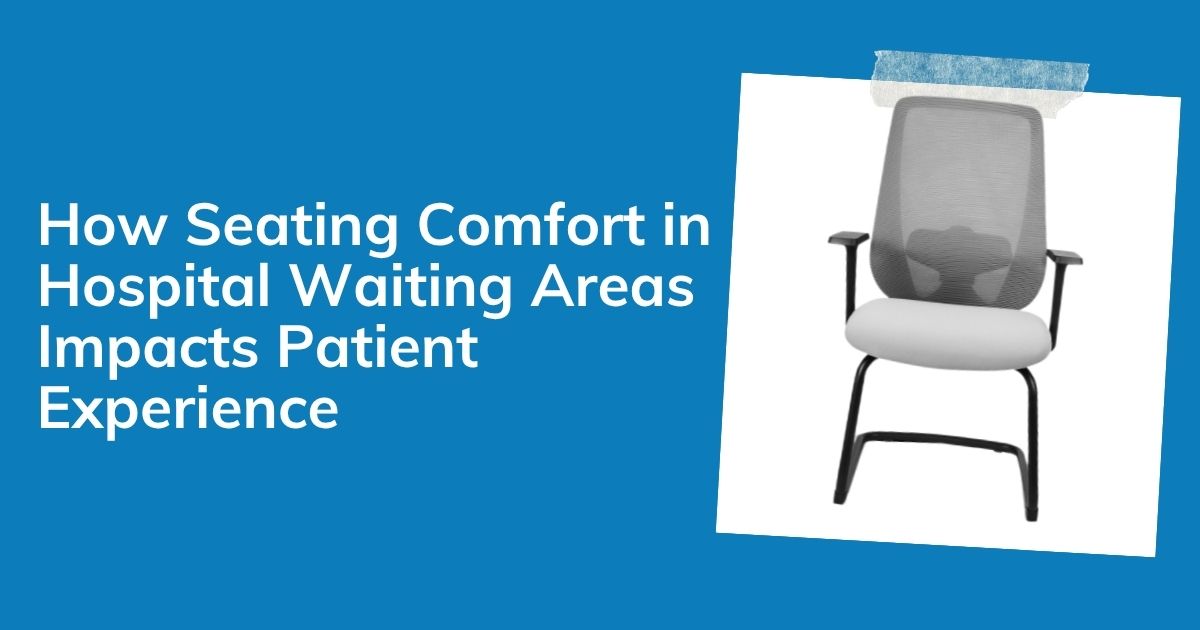
Hospitals choosing healthcare waiting room furniture should think beyond appearance and price. They should look for stable chairs that are easy to clean, appropriately spaced and comfortable enough for different body types. They should also consider whether the design supports movement, privacy, and family seating.
In practical terms, chairs for hospital waiting room areas should help create a calmer environment rather than add to the noise and stress. When hospital waiting area seating comfort is treated as a design priority, it becomes easier to align furniture selection with patient experience in hospital waiting areas and with the realities of daily clinical flow.
A patient may never remember the exact model of a chair, but they will remember whether they felt physically supported while waiting. Research on healthcare environments shows that design choices shape satisfaction and stress and waiting-room research shows that redesigning the environment can improve both care experience and consultation efficiency.
That is why hospital waiting areas, seating comfort, layout, cleanliness and privacy need to work together. When they do, patient visits feel calmer, more respectful and more human. Comfort becomes the quiet signal that the hospital sees the person, not just the appointment.
Hospitals do not need seating that only looks good on delivery day. They need hospital waiting room furniture that stays comfortable, durable and practical under real use. A reliable supplier understands that comfortable hospital seating design must support cleaning, room planning and long-term reliability, not just visual appeal.
That is where Stellar Medico comes in as a medical furniture supplier: it provides healthcare waiting room furniture and hospital waiting room furniture designed for real hospital conditions, helping facilities choose practical solutions that support patient comfort and operational needs.
When a waiting room is designed well, the space feels less like a delay and more like part of the care journey. Patients notice how they are seated, how easy the room is to navigate and whether the environment helps them feel calm and respected.
Across outpatient, pediatric and emergency research, the physical environment repeatedly shows up as a meaningful part of care quality, which is why comfortable hospital seating design deserves real attention from hospital leaders and planners.
If your facility is planning an upgrade, we can help as a medical furniture supplier with hospital waiting room seating, hospital waiting area furniture and modular waiting room seating for clinics that support practical healthcare use.
For hospitals that want waiting spaces to feel calmer, cleaner and more patient-centered, choose us and build a waiting area that supports comfort from the very first seat.
Social Sharing: