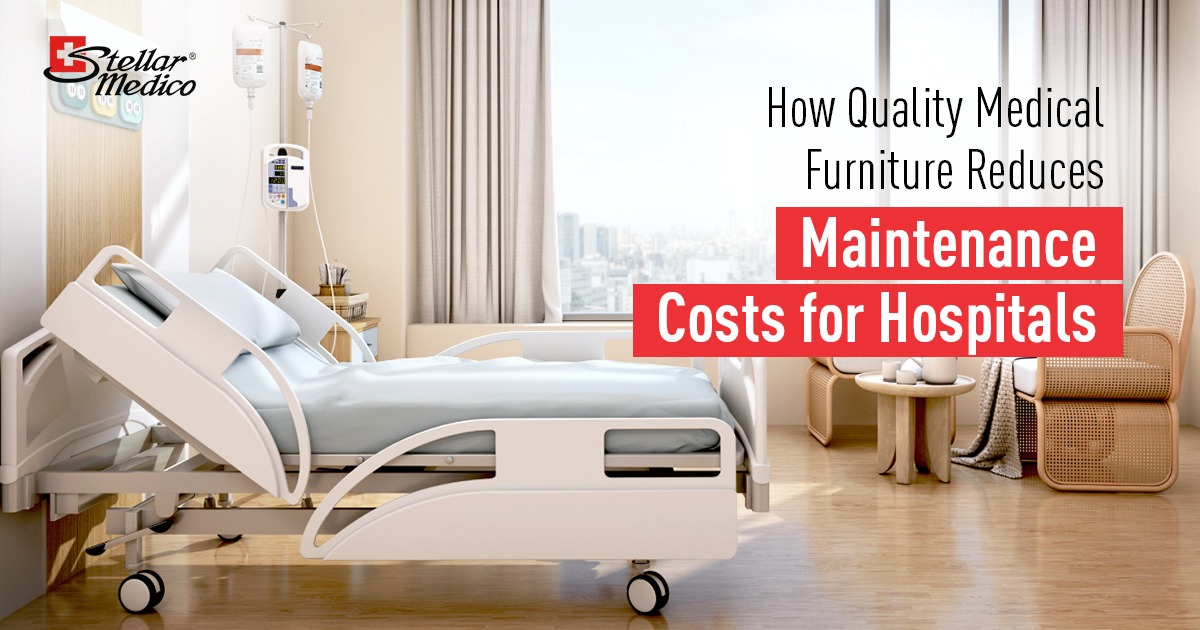
Hospitals operate around the clock, every day of the year. From patient wards and intensive care units to outpatient departments and emergency rooms, furniture is constantly being used, moved, cleaned, adjusted and sanitized. While healthcare facilities often focus on the upfront cost of furniture procurement, the true financial impact extends far beyond the initial purchase price.
One of the biggest hidden expenses in healthcare infrastructure is hospital furniture maintenance costs. Frequent repairs, replacements, downtime and operational disruptions can significantly increase expenses over the lifespan of hospital furniture. This is why more healthcare organizations are investing in durable medical furniture for hospitals that deliver reliable performance year after year.
When evaluating furniture investments, hospital administrators are increasingly looking at hospital furniture total cost of ownership rather than just acquisition costs.
By understanding the long-term value of long-lasting medical furniture, healthcare facilities can reduce maintenance burdens, improve operational efficiency and achieve better returns on investment.
Why Furniture Maintenance Costs Matter More Than Ever
Hospital budgets face constant pressure. Rising patient volumes, regulatory requirements, staffing challenges and technological upgrades all compete for financial resources.
In this environment, reducing avoidable expenses becomes essential. One area often overlooked is hospital furniture maintenance costs.
A hospital bed that frequently requires repairs, a cabinet that deteriorates due to constant cleaning or a chair that needs repeated upholstery replacement may appear inexpensive initially but often becomes costly over time.
This is where durable medical furniture for hospitals creates value. Furniture engineered for healthcare environments requires fewer repairs, experiences less downtime and delivers consistent performance over a longer period.
When viewed through the lens of healthcare furniture lifecycle cost, durability becomes a strategic financial advantage rather than simply a product feature.
Looking Beyond Purchase Price: Understanding Total Ownership Costs
Many healthcare facilities focus heavily on procurement budgets when selecting furniture. However, the purchase price is only one component of overall expenditure.
The concept of hospital furniture total cost of ownership includes initial purchase cost, installation expenses, routine maintenance, repair costs, replacement parts, downtime impacts, replacement cycles. A lower-priced product may appear attractive initially but can generate substantial maintenance expenses over time.
In contrast, durable medical furniture for hospitals often delivers greater value because it minimizes recurring costs while extending usable life. Understanding hospital furniture total cost of ownership helps procurement teams make decisions that support both operational and financial goals.
The Cost of Frequent Repairs in Healthcare Facilities
Every repair comes with a cost that extends beyond parts and labor.
When furniture becomes unavailable due to maintenance issues, healthcare operations may experience disruptions. Staff must adjust workflows, patients may experience inconvenience and maintenance teams are pulled away from other responsibilities.
High hospital furniture maintenance costs often result from products that were not designed for demanding healthcare environments.
Quality-focused facilities increasingly prioritize long-lasting medical furniture because reliability directly affects daily operations.
The fewer breakdowns a facility experiences, the more efficiently it can function.
This is one of the primary reasons why durable medical furniture for hospitals has become an important consideration for modern healthcare infrastructure planning.
How Material Quality Impacts Maintenance Requirements
The materials used in medical furniture significantly influence long-term performance.
Hospitals expose furniture to:
- Continuous movement
- Heavy patient use
- Frequent cleaning
- Strong disinfectants
- Moisture exposure
- Equipment contact
Poor-quality materials deteriorate quickly under these conditions.
High-quality steel frames, healthcare-grade laminates, durable polymers and medical-grade upholstery help reduce hospital furniture maintenance costs by resisting wear and damage. These materials are commonly found in long-lasting medical furniture designed specifically for healthcare settings.
The result is improved durability, reduced repair frequency, and a lower overall healthcare furniture lifecycle cost.
Also Read: How Stellar Medico Ensures Quality as a Medical Furniture Supplier
Why Structural Durability Matters
Hospital furniture must perform consistently under significant stress.
Beds support varying patient weights. Trolleys transport equipment throughout the facility. Workstations endure continuous daily use. Weak construction can lead to frame instability, joint failures, component breakage and increased repair needs.
Strong structural engineering helps durable medical furniture for hospitals withstand years of demanding use.
Reduced structural failures directly contribute to lower hospital furniture maintenance costs and greater operational reliability.
Healthcare facilities that prioritize durability often experience fewer service interruptions and reduced replacement requirements.
The Role of Cleaning and Disinfection in Furniture Longevity
Healthcare facilities maintain strict hygiene standards. Furniture surfaces are disinfected repeatedly throughout the day.
While these cleaning practices are essential, they can accelerate deterioration when furniture is not designed to withstand chemical exposure. This is where quality materials become particularly important.
Long-lasting medical furniture uses finishes and surfaces engineered to tolerate healthcare-grade cleaning agents without degrading. As a result, hospitals benefit from lower repair needs and reduced healthcare furniture lifecycle cost over time.
Furniture that remains functional despite constant sanitization helps control hospital furniture maintenance costs while supporting infection prevention efforts.
Also Read: 5 Key Factors for Choosing Antimicrobial Materials in Hospital Furniture
Mobility Features That Reduce Wear and Tear
Many hospital furniture items are designed to move regularly throughout the facility.
Beds, trolleys, recliners and carts often travel long distances each day. Poor-quality mobility components can lead to:
- Wheel failures
- Brake issues
- Alignment problems
- Increased maintenance demands
Investing in durable medical furniture for hospitals with robust mobility systems reduces these risks significantly. High-performance casters and braking systems improve operational efficiency while lowering hospital furniture maintenance costs associated with frequent repairs. This also improves the overall hospital furniture total cost of ownership.
Why Standardization Helps Reduce Maintenance Expenses
Large healthcare facilities often manage hundreds or thousands of furniture assets. When multiple furniture models require different spare parts and maintenance procedures, complexity increases. Standardized furniture programs simplify maintenance management. Hospitals using long-lasting medical furniture across departments often benefit from:
- Simplified inventory management
- Faster repairs
- Reduced training requirements
- Easier spare-part sourcing
These efficiencies help lower healthcare furniture lifecycle cost while improving operational consistency.
Many leading healthcare organizations now prioritize standardization as part of their long-term asset management strategies.
The Financial Impact of Longer Replacement Cycles
Furniture replacement is one of the largest infrastructure expenses hospitals face.
Products that require replacement every few years create significant financial pressure.
In contrast, durable medical furniture for hospitals extends replacement cycles substantially.
Longer service life means:
- Lower capital expenditure
- Reduced procurement frequency
- Less installation disruption
- Improved budgeting predictability
When evaluating hospital furniture total cost of ownership, replacement frequency often becomes one of the most important factors.
This is why healthcare organizations increasingly prioritize long-lasting medical furniture when planning infrastructure investments.
Supporting Staff Productivity Through Reliable Furniture
Furniture reliability directly affects healthcare staff performance.
A malfunctioning bed, damaged workstation or broken trolley creates workflow disruptions that impact patient care.
Reducing maintenance costs is not simply about saving money, it is also about supporting smoother operations. Reliable furniture allows healthcare professionals to focus on patient care rather than equipment issues. This operational benefit further reduces the overall lifecycle cost associated with inefficiencies and disruptions.
Also Read: 5 Ways Furniture Design Can Boost Patient Flow and Staff Efficiency
Sustainability and Long-Term Value
Sustainability has become a growing priority across healthcare systems. Frequent furniture replacement contributes to waste generation and increases environmental impact.
By choosing durable medical furniture, facilities can reduce waste while maximizing resource efficiency.
Longer product life aligns with both sustainability objectives and financial goals.
Healthcare organizations increasingly recognize that total cost of ownership includes environmental considerations alongside economic performance.
Investing in durable products supports both priorities.
The Hidden Cost of Downtime
Furniture downtime often receives less attention than repair invoices, yet it can be equally expensive. When essential furniture becomes unavailable:
- Patient flow may slow down
- Staff workflows may be disrupted
- Temporary replacements may be required
- Maintenance resources may be stretched
Reducing downtime is one of the most effective ways to lower hospital furniture maintenance costs.
Facilities equipped with long-lasting medical furniture typically experience fewer disruptions and greater operational stability.
These benefits accumulate over time, reducing the overall healthcare furniture lifecycle cost.
Choosing Suppliers That Prioritize Quality
Furniture quality begins long before installation. The expertise of suppliers plays a major role in determining product performance and longevity.
Experienced hospital furniture suppliers understand the demanding requirements of healthcare environments. They help facilities select furniture designed for durability, hygiene and operational efficiency.
Whether sourcing from medical equipment furniture suppliers or evaluating options from global markets including hospital equipment suppliers China, quality and lifecycle performance should remain key evaluation criteria. Selecting the right supplier helps ensure furniture investments deliver long-term value rather than short-term savings.
Why Quality Furniture Is a Financial Strategy, Not Just a Purchase Decision
Healthcare leaders are increasingly recognizing that furniture procurement is not merely an operational task, it is a strategic financial decision. Reducing hospital furniture maintenance costs requires looking beyond the lowest purchase price and focusing on long-term performance. Facilities that invest in durable medical furniture benefit from fewer repairs, longer replacement cycles, improved operational efficiency and lower ownership costs.
When assessed through the framework of total cost of ownership, quality consistently proves to be the more economical choice.
Similarly, long-lasting medical furniture helps control healthcare furniture lifecycle cost while supporting safer, more efficient healthcare environments.
Build Long-Term Value with the Right Medical Furniture Supplier
The true cost of hospital furniture is measured not by what you pay on day one, but by how well it performs over years of continuous use. Lower hospital furniture maintenance costs, reduced downtime, longer replacement cycles and stronger operational reliability all begin with selecting furniture designed for healthcare realities. Investing in durable medical furniture for hospitals is ultimately an investment in efficiency, patient care, and long-term financial sustainability.
As a trusted medical furniture supplier, we support healthcare facilities with reliable, high-quality furniture solutions built for demanding clinical environments. Our focus is on supplying durable products that help hospitals maximize value throughout the furniture lifecycle while maintaining performance, hygiene and operational efficiency.
If you’re looking to reduce maintenance burdens and make smarter long-term furniture investments, connect with us today and equip your healthcare facility with solutions designed to deliver lasting value.
FAQs about Quality Medical Furniture
1. How do quality furniture products reduce hospital maintenance costs?
Quality furniture is built using durable materials and robust construction methods that withstand daily hospital use. This reduces the frequency of repairs, replacement parts and service calls. Over time, hospitals spend less on maintenance while benefiting from more reliable operations and improved equipment availability.
2. What is hospital furniture’s total cost of ownership?
Hospital furniture total cost of ownership refers to the complete cost of a furniture asset throughout its lifecycle. It includes purchase price, installation, maintenance, repairs, downtime, replacement expenses and disposal costs. Evaluating ownership costs helps hospitals make more informed procurement decisions.
3. Why is long-lasting medical furniture important for hospitals?
Long-lasting medical furniture helps healthcare facilities reduce replacement frequency and maintenance expenses. It also improves operational consistency by minimizing disruptions caused by equipment failures. This results in better financial performance and more reliable patient care environments.
4. How does furniture durability impact healthcare furniture lifecycle cost?
Durable furniture typically remains functional for longer periods and requires fewer repairs. This lowers maintenance spending and extends replacement cycles. As a result, the overall healthcare furniture lifecycle cost becomes significantly lower compared to products with shorter service lives.
5. What should hospitals look for when selecting durable medical furniture?
Hospitals should evaluate material quality, structural strength, cleanability, mobility features, warranty support, and expected service life. Working with experienced suppliers also helps ensure furniture is designed specifically for healthcare environments and capable of delivering long-term value.
Social Sharing: