Few investments in a healthcare facility are as important as ICU beds. These beds are not simply pieces of furniture; they serve as essential support systems for critically ill patients who require constant monitoring, specialized positioning and continuous medical attention. The quality, functionality and durability of ICU beds can influence caregiver efficiency, patient comfort, operational workflow and long-term maintenance costs.
For hospitals planning expansions, infrastructure upgrades, or new critical care units, purchasing ICU beds is often a significant financial commitment. However, focusing solely on pricing can lead to costly mistakes in the future. The right approach involves evaluating quality, functionality, safety, and supplier reliability before making a purchasing decision.
When selecting ICU beds for hospitals, healthcare facilities need a structured evaluation process. Successful bulk ICU bed procurement requires careful planning, detailed assessments and a clear understanding of future operational needs. This ICU bed buying guide for hospitals highlights the most important factors decision-makers should review before purchasing ICU beds in large quantities.
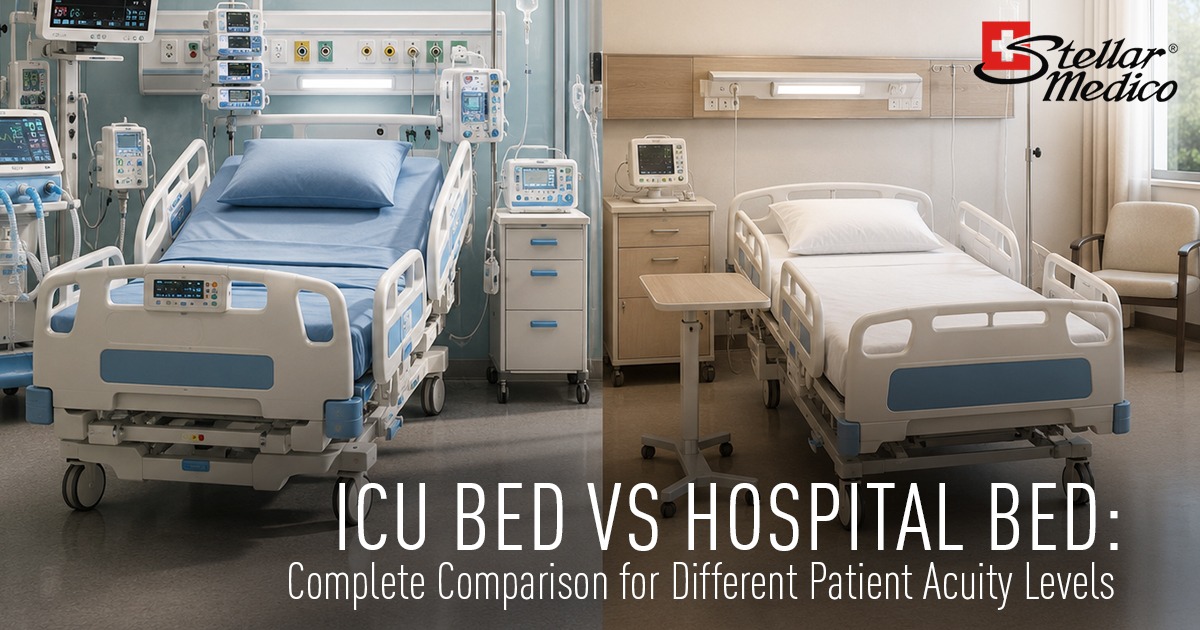
Unlike standard patient beds, ICU beds are designed for patients who require advanced care and frequent medical interventions. They must support complex treatment procedures while ensuring comfort and safety.
When evaluating ICU beds for hospitals, healthcare administrators should consider how these beds will perform in demanding healthcare environments. Every ICU bed becomes part of the daily workflow for nurses, doctors and support staff.
A well-planned bulk ICU bed procurement strategy helps hospitals avoid operational challenges while ensuring that beds remain functional and reliable for years. This ICU bed buying guide for hospitals emphasizes the importance of looking beyond appearance and focusing on performance, durability, and usability.
Before comparing products, hospitals must clearly identify their clinical needs. Different facilities provide different levels of critical care and not every ICU requires the same type of bed.
Reviewing hospital ICU bed specifications should begin with understanding patient demographics, treatment requirements, and occupancy expectations. Hospitals that carefully assess these factors can make more informed decisions during bulk ICU bed procurement.
Questions worth considering include:
Choosing ICU beds for hospitals without first defining these requirements may result in unnecessary expenses or operational limitations. A detailed review of hospital ICU bed specifications ensures that the selected beds align with actual clinical demands.
Patient positioning is one of the most important functions of modern ICU beds. Critically ill patients often remain in bed for extended periods, making adjustability an essential feature.
When reviewing hospital ICU bed specifications, hospitals should pay close attention to positioning capabilities such as height adjustment, backrest elevation, leg elevation, Trendelenburg positioning and reverse Trendelenburg positioning.
These features contribute to patient comfort while helping caregivers perform routine tasks more efficiently. During bulk ICU bed procurement, selecting beds with appropriate positioning functions can improve day-to-day ICU operations.
This aspect is frequently highlighted in every ICU bed buying guide because adjustability directly impacts both patient management and caregiver convenience. Well-designed ICU beds for hospitals should offer smooth and reliable positioning functions that support diverse treatment requirements.
Safety remains one of the most critical considerations when purchasing ICU beds.
Hospitals evaluating ICU beds should thoroughly examine safety mechanisms that help reduce risks within intensive care environments. Features such as side rails, locking systems, emergency release functions and stable bed structures contribute to a safer patient experience.
A close review of hospital ICU bed specifications can help identify beds that meet the safety expectations of modern healthcare facilities.
Successful bulk ICU bed procurement involves balancing comfort and functionality with dependable safety features. This is one reason why every comprehensive ICU bed buying guide for hospitals places significant emphasis on patient and caregiver protection.
ICU beds are exposed to continuous use and frequent movement. As a result, durability should never be overlooked.
The quality of materials, frame construction and structural integrity play a major role in determining product lifespan. When reviewing hospital ICU bed specifications, healthcare facilities should evaluate load-bearing capacity, frame stability, corrosion resistance and overall build quality.
Hospitals investing in ICU beds should remember that durable products often lead to lower maintenance costs over time. During bulk ICU bed procurement, construction quality can have a direct impact on long-term operational efficiency.
This remains one of the most important recommendations found in any effective ICU bed buying guide for hospitals.
Cleanability is a major factor in healthcare environments. ICU beds must be designed to support routine cleaning and sanitization procedures without compromising durability.
When assessing hospital ICU bed specifications, hospitals should look for smooth surfaces, minimal dirt-trapping areas and materials suitable for regular cleaning.
Healthcare facilities conducting bulk ICU bed procurement should prioritize beds that support efficient hygiene management. Cleanability not only affects maintenance efficiency but also contributes to a better patient environment.
Modern ICU beds for hospitals are increasingly designed with healthcare hygiene requirements in mind, making this an important consideration during the selection process.
ICU patients often need to be transported between departments for procedures, diagnostics or treatment. This makes mobility a key factor when evaluating ICU beds.
Hospitals should carefully examine hospital ICU bed specifications related to wheel quality, locking systems, maneuverability and directional control.
Facilities purchasing ICU beds for hospitals in large quantities should ensure that beds can move smoothly through hallways, elevators and treatment areas.
During bulk ICU bed procurement, mobility testing can provide valuable insight into how effectively beds will function in real-world healthcare settings. This practical recommendation is frequently included in every trusted ICU bed buying guide.
Many modern ICU beds rely on electric systems to perform essential functions. Therefore, evaluating electrical reliability is crucial.
Hospitals comparing electric ICU bed suppliers should carefully assess motor performance, control systems, backup power options and overall operational reliability.
Reliable electrical performance becomes particularly important during bulk ICU bed procurement, where equipment consistency across multiple units is essential.
When reviewing products from different electric ICU bed suppliers, healthcare facilities should prioritize reliability over unnecessary complexity. Well-established electric ICU bed suppliers often provide detailed technical information that helps hospitals make informed purchasing decisions.
As highlighted in every practical ICU bed buying guide for hospitals, dependable electrical systems contribute significantly to long-term usability.
Maintenance can substantially affect the total cost of ownership over a bed’s lifespan.
Hospitals should evaluate service accessibility, spare part availability and technical support options before finalizing bulk ICU bed procurement decisions.
Many experienced electric ICU bed suppliers offer maintenance support programs that help reduce downtime and improve equipment longevity. Comparing support services from multiple electric ICU bed suppliers can provide valuable insight into long-term ownership costs.
Healthcare facilities investing in ICU beds for hospitals should consider maintenance planning as part of the overall procurement strategy rather than as an afterthought.
ICU environments often evolve over time as treatment requirements change. Beds should therefore be compatible with a wide range of accessories and equipment.
When reviewing ICU bed specifications, hospitals should evaluate compatibility with IV poles, monitoring equipment, patient support accessories and related healthcare products.
Future adaptability is an important consideration during bulk ICU bed procurement because healthcare facilities frequently expand services or upgrade equipment.
A forward-thinking approach helps ensure that ICU beds continue to support changing operational requirements. This remains a key recommendation in any reliable ICU bed buying guide for hospitals.
Choosing the right supplier is just as important as choosing the right bed.
Healthcare facilities should assess product consistency, delivery capabilities, technical support and after-sales service before making procurement decisions.
Hospitals often work with healthcare furniture suppliers, patient beds or accessories suppliers when sourcing ICU equipment. Some organizations may also evaluate sourcing opportunities from hospital equipment suppliers in China depending on project requirements.
Hospitals comparing electric ICU bed suppliers should pay particular attention to product consistency across large orders. Reliable ICU bed suppliers are generally better positioned to meet delivery schedules and maintain quality standards during bulk ICU bed procurement.
Price will always be a consideration, but it should not be the only factor driving purchasing decisions. The cheapest option may result in increased maintenance costs, shorter product lifespan and operational challenges in the future.
Successful bulk ICU bed procurement focuses on long-term value, including durability, service support, functionality and reliability.
Hospitals reviewing proposals from multiple electric ICU bed suppliers should evaluate overall value rather than comparing upfront pricing alone. The most effective purchasing decisions are often based on performance and lifecycle benefits rather than initial expenditure.
When hospital ICU bed specifications align with operational needs, healthcare facilities can achieve greater efficiency and better utilization of resources.
Selecting the right ICU beds for hospitals requires careful planning, detailed product evaluation and a clear understanding of long-term healthcare needs. From reviewing hospital ICU bed specifications and safety features to assessing mobility, durability, maintenance requirements and supplier reliability, every factor contributes to successful bulk ICU bed procurement.
Hospitals that follow a structured evaluation process are better positioned to make informed purchasing decisions and maximize the value of their investment. For healthcare facilities seeking dependable medical furniture solutions, we’re a trusted medical furniture supplier offering quality-focused hospital furniture products designed for demanding healthcare environments.
Connect with us today to explore reliable ICU solutions and ensure your next bulk ICU bed procurement project is backed by products built for performance, durability and long-term value.
Social Sharing: