Updated on April 28, 2026, for accuracy and clarity.

Providing comfort, safety, and efficiency to patients and healthcare professionals is essential in today’s healthcare landscape. The foundation of any well-equipped healthcare facility lies in its hospital furniture. From ICU beds to waiting room seating, every piece of furniture must be tailored to meet the specific demands of the environment. This is where end-to-end hospital solutions come into play. By offering customized hospital furniture, healthcare facilities can optimize their operations, enhance patient satisfaction, and ensure the well-being of their staff.
This blog explores how hospital furniture customization works, why it is crucial, and how end-to-end hospital solutions address specific healthcare needs.
Customization in hospital furniture goes beyond aesthetics; it is about meeting functional, ergonomic, and safety standards. Healthcare facilities vary in size, patient demographics, and specialties, and furniture must reflect these unique needs.
In critical care units, ICU beds are indispensable. By opting for end-to-end hospital solutions, facilities can customize ICU beds to align with specific patient needs and operational demands.
When sourced from experts in end-to-end hospital solutions, customized ICU beds transform critical care environments, blending technology, comfort, and safety.
One of the key trends in end-to-end hospital solutions is modular hospital furniture. These pieces are designed for versatility, allowing healthcare facilities to adapt to changing needs.
Waiting areas are the first point of contact for patients and their families. Custom hospital furniture ensures these spaces are welcoming, functional, and comfortable.
When included as part of end-to-end hospital solutions, waiting room furniture contributes significantly to patient satisfaction and operational efficiency.
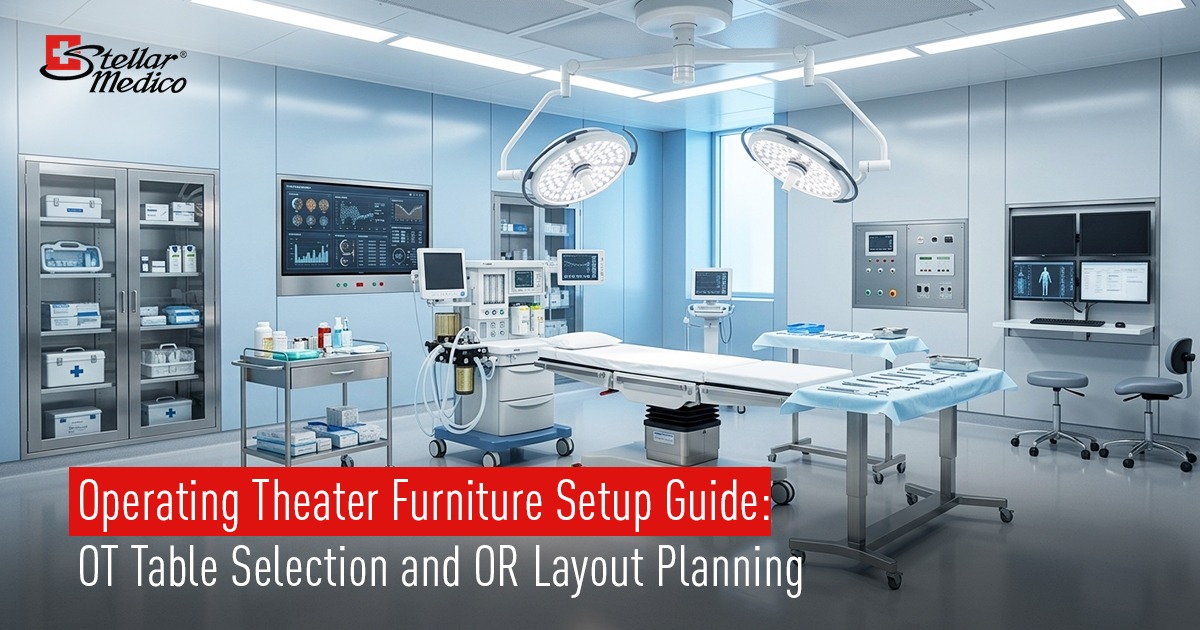
Operating rooms demand precision, hygiene, and accessibility. Custom hospital furniture ensures that surgical teams have the tools they need at their fingertips, reducing downtime and enhancing patient outcomes.
By integrating operating room furniture into end-to-end hospital solutions, healthcare providers can achieve seamless workflows and maintain the highest standards of cleanliness.
Pediatric wards require furniture that is not only functional but also comforting for young patients. Custom hospital furniture in these settings can create a child-friendly environment, reducing stress and anxiety.
Incorporating pediatric-specific designs into end-to-end hospital solutions ensures a supportive and engaging environment for children.
When selecting a provider for end-to-end hospital solutions, it is essential to work with a company that understands the complexities of healthcare environments.
Stellar Medico, a leading name in end-to-end hospital solutions, excels in delivering customized hospital furniture tailored to diverse healthcare needs.
As healthcare facilities strive for eco-friendliness, sustainable hospital furniture has become a priority. Custom furniture can incorporate recyclable materials and energy-efficient designs without compromising on functionality.
Customization in hospital furniture is no longer a luxury; it is a necessity. From ICU beds to waiting room seating, tailored solutions enhance patient care, streamline operations, and reflect the facility’s unique identity.
With Stellar Medico as your partner, you gain access to world-class end-to-end hospital solutions, including:
Invest in customized hospital furniture today to meet the dynamic demands of modern healthcare. Reach out to Stellar Medico for personalized solutions and elevate your facility to new heights of excellence.
Customization in hospital furniture means designing furniture to meet specific medical, patient, and operational requirements. It involves modifying dimensions, materials, features, and functionality to suit different healthcare environments. This ensures that furniture aligns with hospital workflows, improves usability, and enhances both patient and staff experience.
Customized hospital furniture is important because it improves patient comfort, safety, and healthcare efficiency. Tailored designs help reduce patient discomfort, support faster recovery, and allow medical staff to work more effectively. It also ensures compliance with healthcare standards and optimizes available space.
Almost all types of hospital furniture can be customized, including beds, chairs, cabinets, and workstations. Common examples include hospital beds, ICU beds, patient recliners, bedside lockers, overbed tables, nurse stations, and waiting area seating. Each can be tailored based on function, space, and patient needs.
Hospital beds can be customized with adjustable height, positioning controls, safety rails, and mattress types. Additional options include electric or manual controls, pressure-relief systems, mobility features, and integrated monitoring support. These features improve patient comfort and caregiver convenience.
Customized hospital furniture improves patient comfort by providing ergonomic support and adjustable features. It allows patients to change positions easily, reduces physical strain, and supports proper posture. Materials and cushioning can also be selected to enhance comfort during long hospital stays.
Yes, hospital furniture can be customized for different departments like ICU, emergency, and outpatient units. Each department has unique needs, so furniture can be designed for critical care, quick access, mobility, or patient relaxation. This improves both efficiency and patient care quality.
Modular hospital furniture is flexible furniture that can be easily reconfigured or adjusted as needed. It allows hospitals to adapt layouts quickly for changing requirements, such as emergencies or expansion. This flexibility makes it ideal for modern healthcare facilities.
Customized hospital furniture helps optimize space by fitting perfectly into available layouts and serving multiple functions. Compact designs, foldable features, and smart storage solutions reduce clutter and improve movement. This is especially useful in small or high-traffic areas.
Yes, hospital furniture can be customized using eco-friendly and sustainable materials. Manufacturers often use recyclable materials, low-emission finishes, and energy-efficient production processes. This supports environmental responsibility while maintaining durability and hygiene standards.
Key factors to consider include safety, durability, ergonomics, hygiene, and compliance with medical standards. Hospitals should also evaluate ease of cleaning, material quality, flexibility, and long-term cost efficiency. Proper planning ensures the furniture meets both functional and regulatory requirements.
Social Sharing: