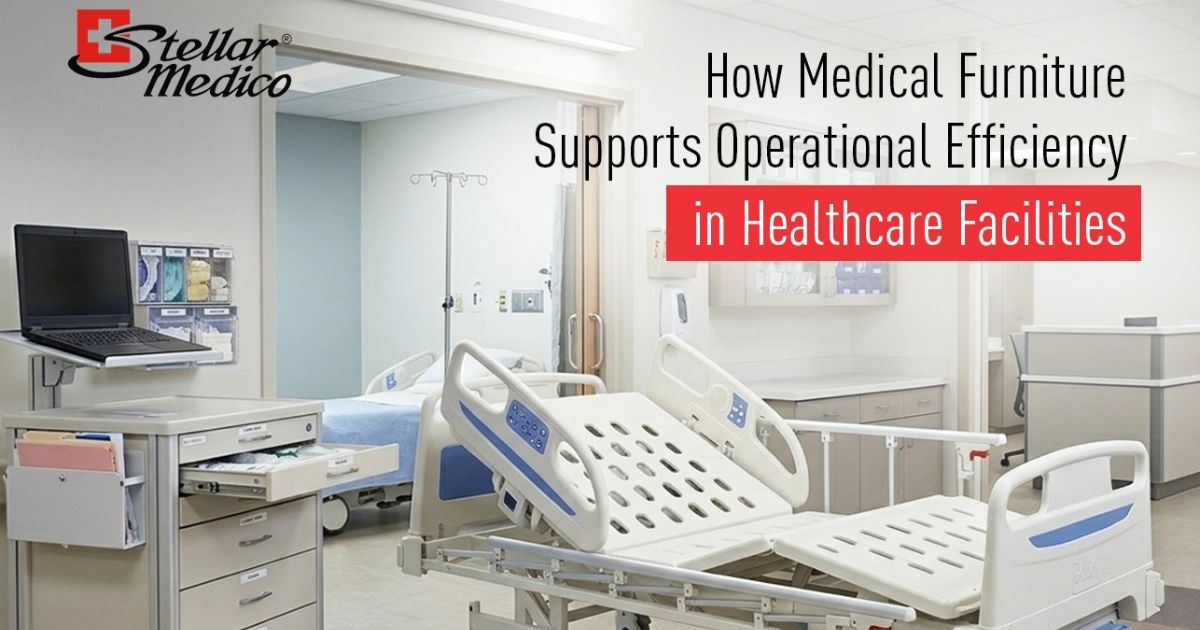
Healthcare facilities operate in highly demanding environments where every second matters. Doctors, nurses, technicians and support staff work together to provide timely care while managing increasing patient volumes and maintaining strict safety standards. In such settings, efficiency is not simply a management goal, it directly impacts patient outcomes, staff productivity and overall hospital performance.
While technology and workforce management often receive significant attention, one factor that is frequently overlooked is medical furniture. The furniture used throughout a healthcare facility influences workflows, patient movement, infection control practices, staff comfort and operational speed. A well-planned healthcare facility furniture solution can significantly improve how healthcare spaces function every day.
When healthcare organizations invest in furniture that supports movement, accessibility, durability and usability, they enhance medical furniture operational efficiency across departments. From patient rooms and nursing stations to outpatient clinics and emergency departments, the right furniture creates an environment where healthcare professionals can work more effectively and patients can receive care more smoothly.
Healthcare facilities face constant pressure to improve performance while controlling costs. Patients expect timely care, staff members require safe working environments and administrators must optimize resources.
Operational efficiency means reducing unnecessary delays, eliminating workflow bottlenecks and ensuring that every aspect of the healthcare environment supports productivity.
This is where medical furniture operational efficiency becomes highly valuable. Furniture is not merely a physical asset; it is part of the infrastructure that supports daily healthcare operations.
A thoughtfully selected healthcare facility furniture solution helps streamline movement, improve accessibility and support clinical workflows without disrupting patient care.
Every hospital activity involves interaction with furniture. Nurses access supplies from storage units, physicians use workstations to review patient records and patients rely on beds, chairs and examination furniture throughout their care journey.
When furniture is poorly designed or improperly placed, staff may waste time navigating around obstacles, searching for equipment or adjusting furniture that does not meet operational requirements.
This is why hospital furniture workflow improvement is a key consideration during healthcare facility planning.
Well-designed furniture layouts allow caregivers to move efficiently between tasks while reducing unnecessary physical effort. A strategic healthcare facility furniture solution creates a more organized and productive environment that supports smoother operations.
Patient movement is one of the most important aspects of hospital efficiency. Delays in admissions, transfers, examinations and discharge processes can affect both patient satisfaction and operational performance.
By supporting medical furniture operational efficiency, hospitals can create spaces that minimize congestion and improve accessibility.
Beds, examination couches, seating arrangements and storage units must be positioned to support smooth patient movement while maintaining safety and comfort.
Effective hospital furniture workflow improvement reduces obstacles, simplifies navigation and contributes to faster patient transitions throughout the facility.
Healthcare professionals spend long hours performing physically demanding tasks. Repetitive movements, awkward postures and extended periods of standing can contribute to fatigue and workplace injuries.
This is where ergonomic medical furniture for staff becomes essential.
Furniture designed with ergonomics in mind helps reduce physical strain while improving comfort and productivity. Adjustable workstations, supportive seating, height-adjustable examination furniture and easy-to-maneuver equipment all contribute to a more efficient work environment.
Investing in ergonomic medical furniture for staff supports both employee well-being and medical furniture operational efficiency.
When healthcare professionals can work comfortably and safely, they are able to focus more effectively on patient care.
Nurses are among the most active professionals in any healthcare facility. They move continuously between patient rooms, nursing stations, medication areas and support departments.
Furniture that supports nursing workflows can significantly enhance operational performance.
Strategically positioned storage systems, mobile workstations and accessible patient-care furniture contribute to clinical furniture for patient care efficiency.
When essential supplies and equipment are readily accessible, nurses spend less time searching for resources and more time caring for patients.
This type of hospital furniture workflow improvement benefits both caregivers and patients by reducing delays and supporting faster response times.
Many healthcare furniture products are designed to move throughout the facility.
Beds, trolleys, recliners and carts are regularly transported between departments. If mobility systems are poorly designed, movement becomes slower and more difficult.
A strong healthcare facility furniture solution incorporates mobility features that support smooth transportation and positioning.
Furniture with reliable wheels, secure locking mechanisms and durable movement systems contributes significantly to medical furniture operational efficiency.
Mobile furniture also supports flexibility, allowing healthcare facilities to adapt quickly to changing patient volumes and operational demands.
Healthcare environments require constant cleaning and disinfection. Furniture that is difficult to clean can increase labor requirements and create unnecessary operational challenges.
This is why clinical furniture for patient care efficiency must also support infection control efforts.
Smooth surfaces, durable finishes and easy-to-clean materials simplify maintenance routines while helping facilities maintain high hygiene standards.
When cleaning processes become more efficient, staff can prepare rooms more quickly for incoming patients.
A properly selected healthcare facility furniture solution contributes to operational efficiency by reducing downtime associated with cleaning and maintenance activities.
Staff fatigue is one of the hidden challenges affecting healthcare performance. Long shifts and physically demanding tasks can reduce productivity and increase the risk of errors.
Furniture design can help address this challenge.
Ergonomic medical furniture for staff supports proper posture, minimizes repetitive strain and reduces unnecessary physical effort.
Height-adjustable workstations, supportive seating and thoughtfully designed patient-care furniture allow healthcare professionals to work more comfortably throughout their shifts.
This contributes directly to medical furniture operational efficiency by helping staff maintain consistent performance levels.
Different healthcare departments have unique operational requirements.
Emergency rooms require rapid access to equipment and supplies. Intensive care units need highly functional patient-care environments. Outpatient clinics focus on maximizing patient throughput while maintaining comfort and efficiency.
A customized healthcare facility furniture solution ensures that each department receives furniture suited to its specific workflows.
By aligning furniture selection with operational needs, hospitals achieve better hospital furniture workflow improvement and create environments that support both staff and patients.
Large hospitals often operate across multiple departments and locations. Standardized furniture systems help create consistency across these environments. Standardization simplifies training, improves maintenance efficiency and reduces procurement complexity.
When staff encounter familiar furniture layouts and functionality throughout the facility, they can work more confidently and efficiently. This contributes to clinical furniture for patient care efficiency while supporting broader organizational goals related to productivity and quality of care.
Standardization is an increasingly important component of modern medical furniture operational efficiency strategies.
The advantages of selecting the right furniture extend far beyond daily operations.
A well-designed healthcare facility furniture solution helps healthcare organizations achieve:
These benefits collectively strengthen medical furniture operational efficiency and support long-term healthcare performance.
Facilities that prioritize furniture as part of their operational strategy often experience smoother workflows and improved resource utilization.
Selecting furniture is not only about choosing products; it is also about selecting the right partner. Experienced medical furniture suppliers understand how furniture influences healthcare operations.
They can help healthcare facilities identify products that support workflow efficiency, staff comfort and patient care objectives. Whether sourcing from medical equipment furniture suppliers or evaluating global procurement options including hospital equipment suppliers in China, healthcare facilities should focus on quality, functionality and long-term value.
A supplier that understands healthcare environments can play an important role in improving operational outcomes.
Healthcare facilities depend on thousands of daily interactions between patients, staff, equipment and infrastructure. Furniture sits at the center of many of these interactions.
A carefully planned healthcare facility furniture solution helps eliminate obstacles, improve accessibility, support caregivers and enhance patient experiences.
When organizations prioritize medical furniture operational efficiency, they create environments where healthcare professionals can work more effectively and patients can receive care more efficiently.
The right furniture is not simply an operational asset, it becomes a strategic advantage.
Creating efficient healthcare environments requires furniture that supports real-world hospital operations. From patient rooms and nursing stations to critical care units and outpatient facilities, every furniture decision influences workflow, productivity and patient care outcomes.
Investing in solutions that enhance medical furniture operational efficiency helps healthcare facilities improve performance while supporting staff and patients alike.
As a trusted medical furniture supplier, Stellar Medico provides dependable healthcare furniture solutions designed to meet the demands of modern healthcare environments.
Our product range supports hospitals, clinics and healthcare facilities seeking reliable furniture that contributes to smoother workflows and long-term operational success.
If you’re looking for a partner that understands the importance of functional, durable and efficient healthcare furniture, connect with us today and build healthcare spaces that work smarter every day.
Social Sharing: