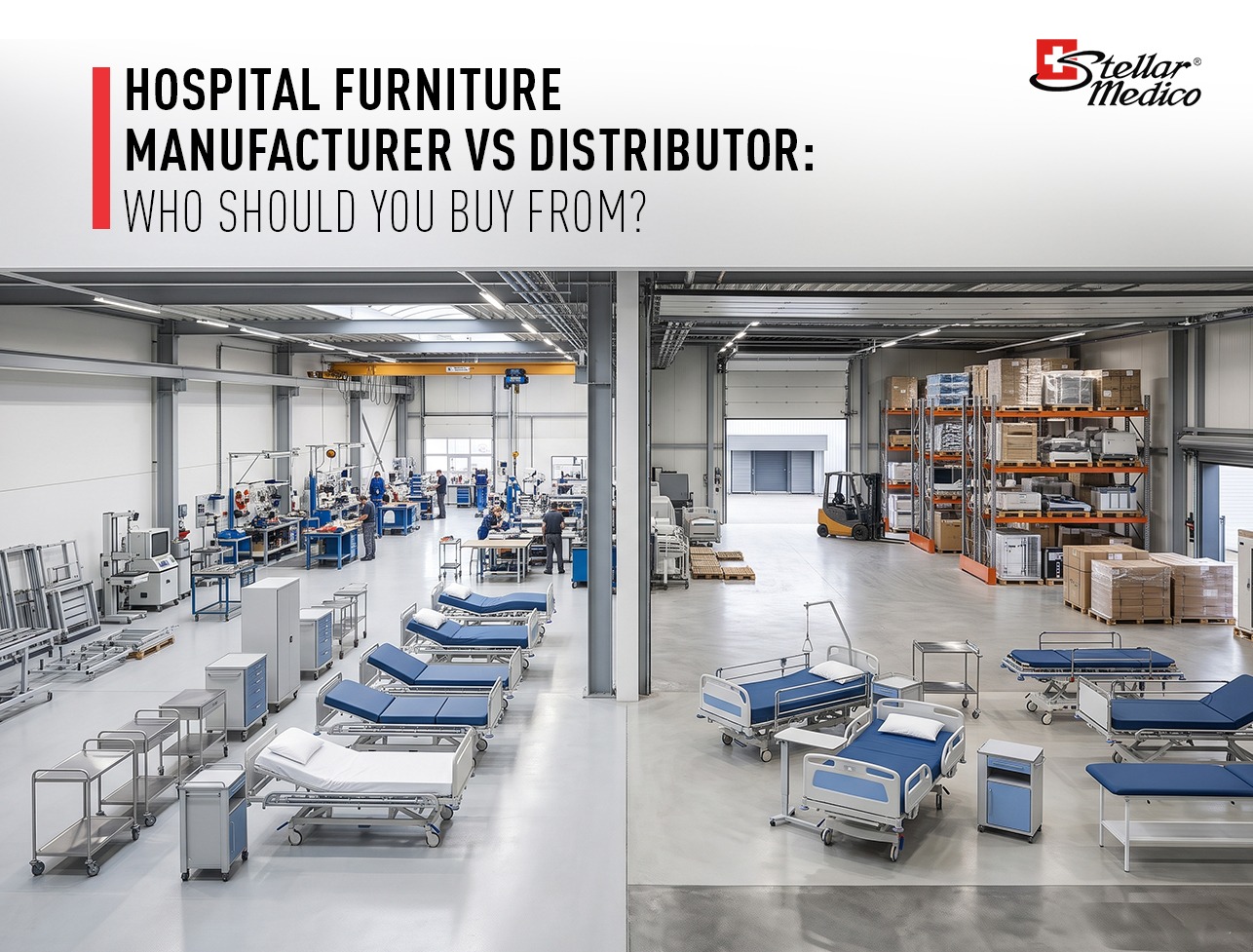
Hospital furniture is used across wards, treatment areas and support departments. Buyers commonly compare a hospital furniture manufacturer with a distributor. One makes the furniture; the other typically sources products from manufacturers and resells them. Neither route is automatically better.
Manufacturer vs Distributor: What Is the Difference?
A hospital furniture manufacturer makes products in its own facility or through production arrangements it controls. It is generally closer to the manufacturing process and may explain materials, construction, capacity and available configurations. A hospital bed manufacturer should be able to provide model-specific product information. Confirm whether a hospital bed manufacturer can supply compatible accessories.
A medical furniture manufacturer may develop designs or offer selected customisation, but capabilities vary. Ask whether the medical furniture manufacturer owns the design, controls production or works with contracted factories. Confirm which activities the medical furniture manufacturer performs in-house and which are outsourced.
A distributor purchases products from one or more manufacturers and resells them to hospitals, clinics or other buyers. A hospital furniture supplier may be a distributor, importer or manufacturer. A hospital furniture supplier should be able to identify the source of every model. The supplier label alone does not identify its maker.
For example, a hospital bed manufacturer may produce beds, while a distributor may source models from several brands. Ask for the exact model specifications and product origin.
Buying Directly from a Manufacturer: What Are the Advantages?
1. Closer Access to Product Information
Buying from a hospital furniture manufacturer can provide direct access to information about construction, materials, configurations and production. This is useful when specifications need clarification or a project requires many similar units.
Ask for model-specific dimensions, load limits, operating instructions and warranty terms. A hospital bed manufacturer should clarify compatible mattresses, side rails and accessories. Check the safe working load for the complete configuration, replacement-part availability and warranty conditions for the bed and included accessories.
2. More Scope to Discuss Requirements
Some manufacturers discuss changes to dimensions, finishes or accessories for bulk orders. Options depend on design, production capability and minimum quantities. Confirm feasibility, cost and lead-time implications, and record agreed changes in the final specification.
3. Direct Communication About Production
Direct contact can clarify production schedules and repeat orders, but production queues, materials, inspection, packing and shipping still affect delivery.
Buying Through a Distributor: When Does It Make Sense?
1. Access to Multiple Product Brands
A distributor may supply furniture from several manufacturers, helping hospitals compare models or source different categories through one contact. It may also source products from more than one hospital bed manufacturer. Ask each hospital bed manufacturer for the same comparison details. For mixed orders, this can simplify sourcing. Confirm the manufacturer and model behind every quoted item.
2. Local Availability and Coordination
Distributors with local stock may help meet urgent needs. Ask whether the item is available, reserved or still needs sourcing.
3. Consolidated Purchasing
A distributor may consolidate products in one quotation. Clarify who handles delivery, installation, warranty claims and replacement parts.
Which Option Is More Cost-Effective?
Buying directly does not always cost less. Total cost depends on quantity, specifications, freight, taxes, delivery, installation and support.
A distributor’s price may include warehousing or local coordination. A hospital furniture manufacturer may quote production separately from shipping and handling. A direct quote may look lower but leave the buyer responsible for freight, customs or local support. Compare the complete landed cost, not just the product price.
Request matching quotations and ask each hospital furniture supplier to itemise additional charges. Clarify whether installation and spare parts are included.
What Should Hospitals Check Before Placing an Order?
Regardless of the sales route, check the product and seller carefully.
Specifications: Verify dimensions, materials, safe working load, adjustment features and compatibility with the intended department. Ask for model-specific details.
Documentation: Request relevant test reports, declarations, certificates or inspection records. Check their scope, validity and issuing body; a company certificate does not automatically cover every product.
Warranty and service: Confirm the warranty period, exclusions, claim process, repair responsibility and availability of replacement parts.
Delivery: Check lead times, packaging, unloading, site access and whether installation is included. Large projects need an agreed delivery sequence.
Track record: Ask for references from comparable orders or projects. These checks matter whether you approach hospital furniture suppliers for one department or a complete facility. They are equally important when comparing medical equipment furniture suppliers, since product categories can have different documentation and service needs.
Manufacturer or Distributor: Questions to Ask Before You Decide
Before ordering, ask who actually makes each product, where it is manufactured and dispatched from, whether specifications and accessories are confirmed and whether the item is in stock or needs to be sourced. Also clarify who handles warranty claims, technical queries and replacement parts and request a realistic delivery timeline.
These answers establish whether you are dealing with a manufacturer, authorised distributor, importer or another supplier. They also make quotations easier to compare.
Why the Right Supplier Matters for a Hospital Project
A new facility may need beds, mattresses, cabinets, stretchers, trolleys, couches and screens across departments. Coordinating these orders takes planning.
A hospital furniture supplier with a suitable range can consolidate enquiries, but range alone is not enough. Check product details, sourcing transparency, delivery planning and issue resolution. For larger projects, medical furniture suppliers should clarify available products, information needed and how the order will be coordinated. Ask the medical furniture manufacturer or distributor to nominate one contact for order updates and documentation. Compare proposed alternatives by specification, not appearance.
Choosing a Supplier for Different Procurement Needs
For a large repeat order with specific configuration needs, direct engagement with a hospital furniture manufacturer may be worth exploring. A medical furniture manufacturer can also clarify whether a requested modification is part of its standard range or a special production request. Ask the medical furniture manufacturer to confirm this in writing, provided it can meet delivery and support expectations.
For a mixed order across brands or categories, a distributor may be more convenient. A hospital furniture supplier with a broad network can reduce separate transactions. A medical furniture manufacturer may be less convenient for a buyer who needs unrelated brands in one shipment, provided product origins and responsibilities are clear.
For smaller purchases, local stock and accessible service may matter more than factory access. Ask whether a hospital bed manufacturer has an established local service arrangement. Healthcare furniture suppliers should be able to provide the required models, accurate documentation and support. Buyers sourcing internationally, including from hospital equipment suppliers China, should check shipping terms, import responsibilities and local service.
Explore Medical Furniture Options with Stellar Medico
The right choice comes down to product suitability, clear information, coordination and support beyond the quotation. A hospital furniture manufacturer may be the right route for some orders, but not every hospital purchase needs to go directly to the factory. Hospitals should know who makes the products, who supplies them and who handles questions after purchase.
Stellar Medico serves healthcare buyers as a medical furniture supplier. Its listed range includes medical beds, mattresses, trolleys, stretchers, lockers, instrument trolleys, patient stools, cabinets, examination couches, examination lights and hospital screens, alongside office furniture and OT categories.
Sourcing for a new hospital or expanding a department? Explore our product range and contact the team to discuss your medical furniture requirements.
FAQs about Hospital Furniture Manufacturer vs Distributor
1. What is the main difference between a hospital furniture manufacturer and a distributor?
2. Is it cheaper to buy hospital furniture directly from a manufacturer?
3. What should I verify when buying from a hospital furniture supplier?
4. Can a distributor provide customised hospital furniture?
5. How do I choose the right supplier for a large hospital project?
Social Sharing: