When a patient is admitted to a hospital, one of the first pieces of equipment they encounter is the bed. It may seem like a simple decision, but selecting the right bed has a direct impact on patient safety, comfort, mobility, nursing efficiency and clinical outcomes. For hospital administrators and procurement teams, understanding ICU bed vs hospital bed is essential because the wrong choice can affect both patient care and operational efficiency.
A patient recovering from routine surgery has very different needs from a critically ill patient connected to monitors and life-support equipment. That is why hospitals use different bed types for different departments and patient care levels.
This blog offers a practical comparison of ICU bed vs hospital bed, explains where each is most appropriate, and highlights the factors hospitals should consider before procurement.
The biggest mistake hospitals make is comparing beds without first considering patient acuity. Lower-acuity patients generally need comfort, safe positioning and basic nursing support. Higher-acuity patients may require continuous monitoring, emergency access, frequent repositioning and advanced critical care support.
Because of these differences, hospitals cannot rely on a single bed model for every department. The relationship between acuity and equipment is the foundation of any meaningful ICU bed vs hospital bed decision. A bed should be selected according to clinical need, not simply according to budget or availability.
A standard hospital bed is designed for general inpatient care, including medical wards, surgical wards, maternity units and recovery areas. These beds usually provide height adjustment, backrest elevation, knee adjustment, side rails and mobility features that support routine nursing care.
The primary purpose of a hospital bed is to provide comfort and safe positioning while allowing staff to perform daily care tasks efficiently. Among the various bed types used in hospitals, standard ward beds are the most common because they are suitable for a large proportion of inpatient admissions.
Understanding this role is the first step in evaluating ICU bed vs hospital bed for different clinical situations.
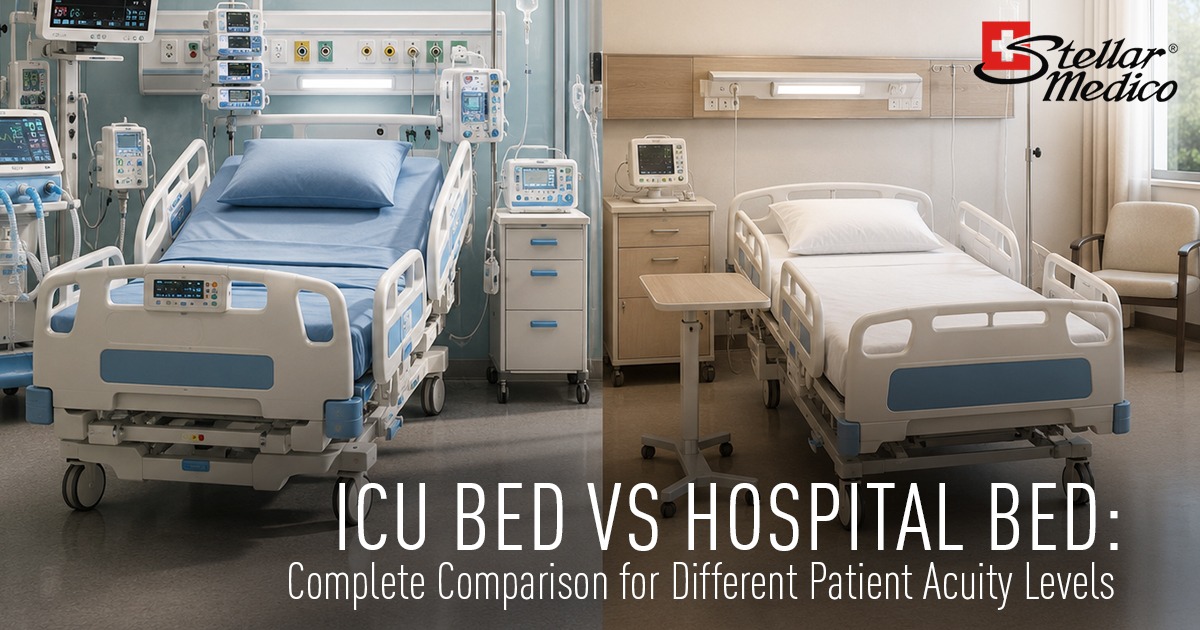
An ICU bed is designed for patients who require intensive treatment and continuous observation. It supports advanced critical care activities such as ventilator management, hemodynamic monitoring, emergency procedures and frequent patient repositioning. ICU beds generally include advanced positioning controls, higher weight capacities, emergency CPR functions and better access for caregivers.
The difference between these bed types is not just comfort; it is clinical capability. ICU beds are engineered for higher patient care levels, where rapid intervention and continuous monitoring are essential. This is why the discussion of ICU bed vs hospital bed is fundamentally about matching equipment to patient acuity.
Hospitals often consult experienced hospital furniture suppliers when selecting ICU and ward bed systems for different departments.
The most significant distinction in ICU bed vs hospital bed is the level of intervention the bed is designed to support. A ward bed is intended for recovery, observation and routine nursing care. An ICU bed is intended for patients whose condition may change rapidly and who may require immediate medical intervention.
ICU beds allow caregivers to access the patient from multiple sides, reposition the patient more frequently and integrate monitoring and life-support equipment more effectively. Standard hospital beds focus primarily on comfort and routine care. This functional difference should guide all bed allocation decisions within a hospital.
Mobility support varies greatly between ICU bed vs hospital bed. Patients in general wards are often encouraged to sit, stand and walk during recovery, so standard beds are designed to facilitate routine transfers with basic assistance.
ICU patients may be sedated, ventilated or unable to move independently. ICU beds therefore include features that support safer repositioning, lateral transfers and caregiver handling during critical care procedures. These differences reflect the much higher patient care levels found in intensive care units.
Hospitals frequently evaluate transfer features with specialized patient beds and accessories suppliers during procurement planning.
Positioning flexibility is another major factor in ICU bed vs hospital bed. Standard hospital beds usually provide basic head and knee elevation suitable for eating, resting and routine care. ICU beds offer a wider range of therapeutic positions, including advanced backrest and leg positioning used in critical care settings.
For patients with respiratory compromise, hemodynamic instability or pressure-injury risk, these advanced positioning options can be clinically important. A careful specifications comparison often reveals that ICU beds provide substantially greater positioning flexibility than standard ward beds.
Healthcare facilities commonly consult experienced medical furniture suppliers when comparing advanced ICU bed features.
Modern ICUs rely heavily on monitors, infusion pumps, ventilators and other life-support devices. ICU beds are designed to integrate with this equipment through mounting options, cable management systems and accessory compatibility.
Standard hospital beds may support basic accessories, but they are generally not intended to function as integrated critical care platforms. This difference becomes especially important during procurement and specifications comparison exercises because equipment integration affects both safety and workflow efficiency.
Many hospitals review equipment-integration requirements with specialized medical equipment furniture suppliers when planning ICU projects.
As patient care levels increase, safety requirements become more demanding. ICU beds often include enhanced side rails, brake indicators, emergency controls and caregiver alerts designed for high-risk patients. These features help staff respond quickly to sudden clinical changes.
Standard hospital beds include essential safety features appropriate for routine inpatient care, but they are not designed for the same intensity of monitoring and intervention. This difference is another key consideration in ICU bed vs hospital bed evaluations.
Pressure injury prevention is particularly important in intensive care because many ICU patients remain in bed for extended periods. ICU beds are more likely to support advanced pressure-management surfaces and frequent repositioning protocols used in critical care environments.
Standard hospital beds may offer basic pressure-relief options suitable for routine inpatient care, but they are generally not intended for patients at the highest risk of pressure injuries. Including mattress compatibility in the specifications comparison process is therefore essential.
The most practical way to approach ICU bed vs hospital bed is to match the bed to the patient’s condition. Stable medical and surgical patients generally benefit from standard hospital beds designed for comfort and routine care. Patients who require continuous monitoring, ventilatory support, vasoactive medications or rapid emergency intervention are more appropriate candidates for ICU beds.
Between these groups are step-down and high-dependency patients, where hospitals may choose enhanced ward beds depending on local protocols. Understanding these patient care levels helps prevent both under-specification and unnecessary overspecification of bed systems. Different bed types should be viewed as clinical tools matched to patient needs.
Hospitals should avoid purchasing all beds under a single specification. A better approach is to develop a bed matrix based on department function, anticipated acuity, mobility needs, monitoring requirements and future expansion plans.
A structured ICU bed vs hospital bed review should involve clinicians, nursing leaders, biomedical teams, infection-control representatives and procurement professionals. Reviewing multiple bed types through a formal specifications comparison process helps hospitals balance clinical capability, operational efficiency and long-term value.
Healthcare organizations often engage experienced healthcare furniture suppliers during this planning phase to evaluate product consistency and service support.
ICU beds generally have a higher upfront cost because of their advanced features and critical care capabilities. However, procurement teams should evaluate total value rather than purchase price alone. Service life, maintenance requirements, staff efficiency, patient safety outcomes and replacement cycles all influence long-term cost.
In some situations, using an ICU bed for a low-acuity patient may represent unnecessary expenditure, while using a standard ward bed for a critically ill patient may compromise care. A thoughtful ICU bed vs hospital bed analysis therefore focuses on clinical appropriateness and lifecycle value. Some large institutions may also review broader sourcing options, including suppliers associated with hospital equipment suppliers China, depending on procurement policy and project scale.
The ICU bed vs hospital bed decision is ultimately about matching clinical capability to patient needs. Standard hospital beds are appropriate for routine inpatient care, mobility support and recovery-focused treatment, while ICU beds are designed for intensive monitoring, rapid intervention and advanced critical care management. Understanding the differences in bed types, expected patient care levels and operational requirements allows hospitals to make more accurate procurement decisions and allocate resources more effectively. A careful specifications comparison can improve patient safety, support clinical workflows and deliver better long-term value from hospital bed investments.
As a trusted medical furniture supplier, Stellar Medico supplies a comprehensive range of hospital and ICU furniture solutions designed for modern healthcare environments. From general ward beds to advanced critical-care support furniture, we provide reliable products that support healthcare facilities across a wide range of clinical applications.
If you’re planning a new hospital project, ICU expansion, ward upgrade or replacement program, connect with us today and source dependable bed solutions that support safer care, better efficiency and long-term healthcare performance.
Social Sharing: