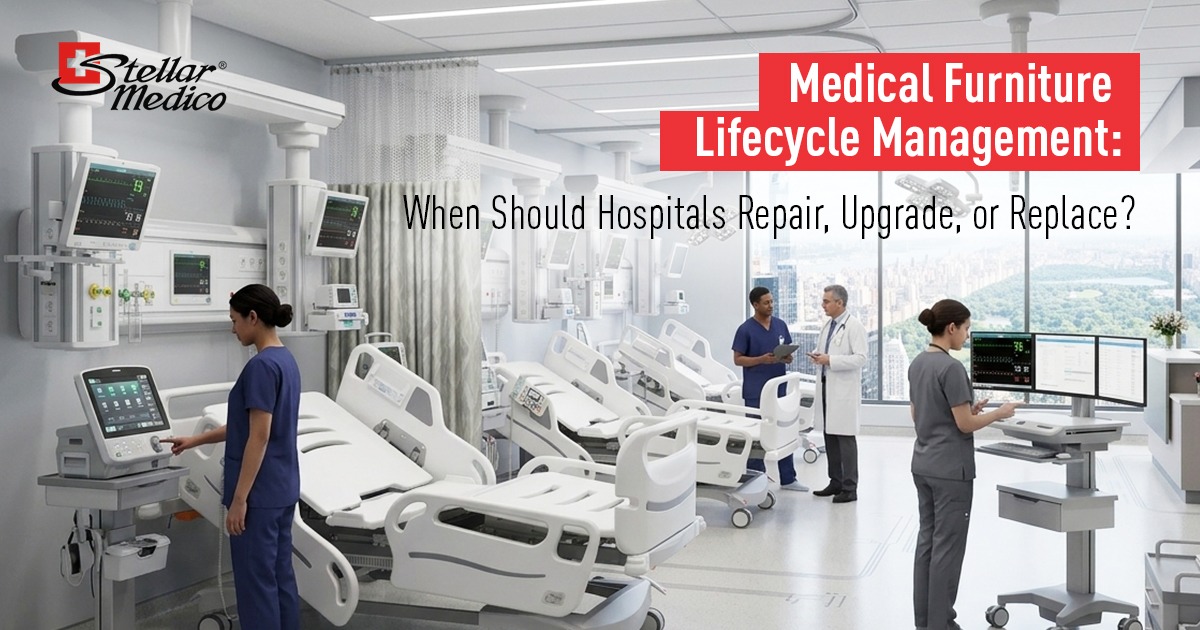
Hospital furniture is one of the most frequently used assets in any healthcare facility. From patient beds and examination couches to overbed tables, medical trolleys and waiting area seating, these products support daily clinical operations while contributing to patient comfort and staff efficiency. However, continuous use, regular cleaning and demanding healthcare environments inevitably lead to wear and tear over time. This makes medical furniture lifecycle management an essential part of maintaining a safe, efficient and cost-effective healthcare facility.
Knowing when to replace hospital furniture is not always straightforward. While some furniture can continue performing well with routine maintenance or minor repairs, other items may require upgrades or complete replacement to maintain operational efficiency. Understanding the hospital furniture lifespan, evaluating the repair vs replace hospital furniture decision and managing the medical furniture maintenance cost strategically helps healthcare facilities make informed decisions that support long-term performance.
In this blog, we’ll explore how hospitals can effectively manage the lifecycle of their medical furniture while maximizing value from every investment.
Medical furniture experiences constant use across nearly every department of a hospital. Patient transfers, emergency procedures, routine examinations, cleaning protocols and equipment movement place significant demands on every furniture component. Without proper medical furniture lifecycle management, hospitals may face frequent breakdowns, operational disruptions, increased maintenance expenses and compromised patient experiences.
A structured lifecycle management approach allows hospitals to monitor furniture condition throughout its service life rather than waiting until products fail completely. This proactive strategy helps identify opportunities for maintenance, upgrades or replacement before problems begin affecting daily operations.
Understanding when to replace hospital furniture also supports better budgeting and procurement planning. Instead of making emergency purchases, healthcare facilities can schedule replacements in advance, reducing financial pressure while ensuring uninterrupted patient care.
Every type of medical furniture has a different expected service life depending on its purpose, frequency of use, build quality and maintenance practices. While some furniture continues performing reliably for many years, high-demand equipment used in critical care environments often requires closer monitoring.
The hospital furniture lifespan is influenced by several factors, including daily usage, cleaning frequency, environmental conditions and preventive maintenance. Patient beds used around the clock naturally experience more stress than furniture placed in administrative areas or consultation rooms.
Hospitals should regularly evaluate structural integrity, functionality, mobility, surface condition and overall performance throughout the hospital furniture lifespan. Routine inspections help identify early signs of deterioration before they affect patient safety or staff productivity.
Effective medical furniture lifecycle management encourages healthcare facilities to establish maintenance schedules and condition assessments that extend furniture usability while supporting reliable healthcare delivery.
Not every damaged furniture item needs immediate replacement. In many situations, timely repairs can restore functionality while extending the product’s usable life.
Minor issues such as loose fittings, damaged wheels, worn handles or replaceable accessories can often be repaired without affecting the furniture’s overall performance. Choosing repairs in these situations helps hospitals optimize budgets while maintaining operational continuity.
However, the decision should always involve a careful furniture assessment. Repairs should only be considered when the structural integrity remains intact, replacement parts are readily available and repair costs remain reasonable compared to the product’s remaining lifespan.
Regular preventive maintenance also helps reduce the overall medical furniture maintenance cost by identifying small issues before they develop into expensive repairs or complete equipment failure.
Sometimes furniture remains functional but no longer meets the evolving requirements of modern healthcare environments. In these situations, upgrading may offer a practical alternative to complete replacement.
Hospitals frequently expand services, introduce new medical technologies or redesign departments to improve efficiency. Existing furniture may require modifications or upgrades to better support changing workflows.
As part of medical furniture lifecycle management, healthcare facilities should evaluate whether current furniture continues meeting operational demands. Upgrades may include improved mobility features, enhanced storage configurations, updated accessories or better compatibility with modern medical equipment.
Reviewing the hospital furniture lifespan alongside changing departmental requirements allows hospitals to determine whether upgrades can extend product usability while supporting evolving clinical needs.
A thorough repair vs replace hospital furniture evaluation also helps identify situations where upgrading offers better value than repeated repairs or immediate replacement.
Although repairs and upgrades can significantly extend usability, every furniture product eventually reaches the end of its practical service life. Continuing to repair aging furniture often results in increasing downtime, recurring maintenance expenses and reduced operational efficiency.
One of the clearest indicators of when to replace hospital furniture is when recurring repairs become frequent and costly. If maintenance expenses continue rising while product reliability declines, replacement often becomes the more economical long-term solution.
Visible structural damage, compromised stability, corrosion, broken frames, worn mechanisms or furniture that no longer functions as intended are additional signs that replacement should be considered.
Monitoring the medical furniture maintenance cost over time provides valuable insight into whether hospitals are investing in repairs that no longer deliver sufficient value. Strategic medical furniture lifecycle management focuses on balancing maintenance expenses with long-term operational performance rather than simply extending furniture use indefinitely.
Preventive maintenance plays a significant role in maximizing the hospital furniture lifespan and reducing unexpected failures. Rather than waiting until problems occur, hospitals benefit from scheduled inspections, cleaning routines, lubrication of moving components and timely replacement of worn accessories.
Routine maintenance not only improves reliability but also helps control the overall medical furniture maintenance cost by preventing minor issues from developing into major repairs.
Hospitals that incorporate preventive maintenance into their furniture lifecycle management strategy are better equipped to identify patterns of wear, predict replacement timelines and allocate budgets more effectively.
Regular assessments also make the repair vs replace hospital furniture decision much easier because furniture condition is continuously monitored instead of being evaluated only after failure occurs.
Replacing medical furniture should never be a reactive decision. Hospitals that rely solely on emergency replacements often face higher procurement costs, operational disruptions and inconsistent furniture across departments. Instead, a structured replacement strategy allows healthcare facilities to plan investments more effectively while maintaining uninterrupted patient care.
A successful medical furniture lifecycle management plan includes regular condition assessments, maintenance records and scheduled evaluations for every major furniture category. By reviewing the hospital furniture lifespan of each asset, hospitals can identify products nearing the end of their service life and plan replacements before failures occur.
This proactive approach also simplifies budgeting by spreading investments over several years rather than making large, unexpected purchases. At the same time, regularly reviewing medical furniture maintenance cost helps hospitals determine whether continued repairs remain financially practical or if replacement offers better long-term value.
Ultimately, understanding when to replace hospital furniture becomes much easier when decisions are based on documented performance, maintenance history and operational requirements rather than urgency alone.
Every hospital aims to maximize the value of its investments while maintaining high standards of patient care. Furniture decisions should therefore balance initial purchase costs with long-term durability, functionality, and maintenance requirements.
While extending the hospital furniture lifespan through proper maintenance is beneficial, holding onto outdated or frequently malfunctioning furniture may increase operational inefficiencies. Equipment that regularly requires servicing can interrupt workflows, increase downtime and create unnecessary expenses over time.
Evaluating the repair vs replace hospital furniture decision from both financial and operational perspectives enables hospitals to make smarter investments.
In many situations, replacing heavily worn furniture can significantly reduce future medical furniture maintenance cost, improve staff productivity and provide a better experience for patients and caregivers alike.
Strategic medical furniture lifecycle management focuses on achieving this balance, ensuring healthcare facilities invest in furniture that delivers dependable performance throughout its intended service life.
Effective lifecycle management does not end once furniture is purchased. Selecting a reliable medical furniture supplier is equally important for ensuring consistent product quality, dependable availability and long-term value.
Healthcare facilities should look for healthcare furniture suppliers that offer durable medical furniture designed for demanding clinical environments while maintaining consistency across different departments. A dependable supplier should also be able to support future expansion, product replacements and evolving infrastructure requirements without compromising on quality or availability.
By partnering with an experienced hospital furniture supplier, hospitals can streamline procurement, maintain consistency across their facilities and make long-term investments that support efficient healthcare operations.
Every piece of medical furniture follows a lifecycle, from installation and daily use to maintenance, upgrades and eventual replacement. Managing this lifecycle strategically allows hospitals to improve operational efficiency, reduce unexpected expenses and maintain safe, functional healthcare environments.
Rather than relying on assumptions, healthcare facilities should regularly review furniture performance, maintenance history and operational requirements. This makes medical furniture lifecycle management a continuous process instead of a one-time activity.
By understanding when to replace hospital furniture, monitoring the hospital furniture lifespan, evaluating the repair vs replace hospital furniture decision carefully and controlling the medical furniture maintenance cost, hospitals can maximize the value of every furniture investment while supporting uninterrupted patient care.
Medical furniture is a long-term investment that directly influences hospital operations, patient comfort and staff efficiency. Adopting a proactive approach to medical furniture lifecycle management enables healthcare facilities to make informed decisions about maintenance, upgrades, and replacements while avoiding unnecessary costs and operational disruptions. Knowing when to replace hospital furniture is not simply about identifying worn-out products, it’s about ensuring every piece of furniture continues to support safe, efficient, and reliable healthcare delivery.
As a trusted medical furniture supplier, we supply a comprehensive range of quality medical furniture solutions designed for demanding healthcare environments.
Whether you’re planning routine replacements, upgrading departments or expanding your facility, we provide dependable hospital furniture products to support your procurement needs.
Partner with Stellar Medico today and invest in reliable medical furniture solutions that keep your healthcare facility prepared for the future.
Social Sharing: